

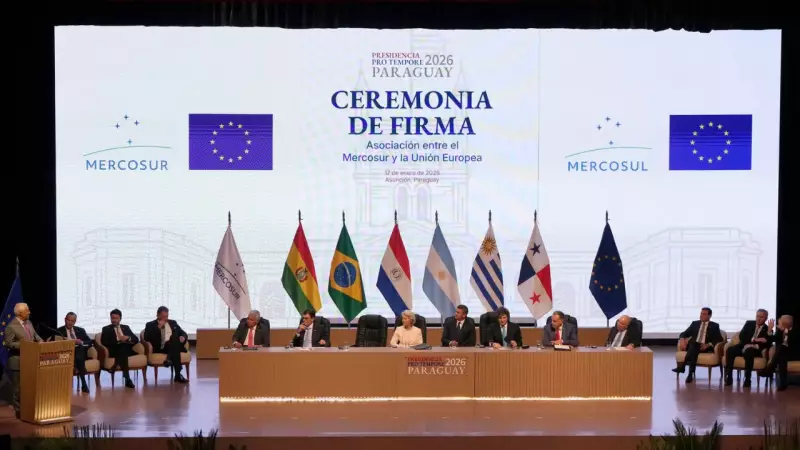
The European Union and the Mercosur bloc of South American nations have finally signed a historic free trade agreement. This landmark deal came together on Saturday in Asuncion, Paraguay. The signing ceremony marks the end of more than twenty-five years of difficult negotiations.
A Long-Awaited Breakthrough
Both sides worked tirelessly to reach this agreement. They faced numerous challenges over the decades. Now, the pact aims to strengthen commercial ties between Europe and South America. This move comes at a critical time. Rising protectionism and trade tensions are affecting markets worldwide.
Geopolitical Significance
The signing in Paraguay's humid capital carries major geopolitical weight. For the European Union, this represents a significant victory. It expands the bloc's presence in a resource-rich region. South America holds vast natural resources that are increasingly important.

Currently, the United States and China are competing for influence in this area. American tariffs and surging Chinese exports have changed global trade dynamics. The EU-Mercosur deal shows Europe's commitment to engaging with South America. It demonstrates a strategic push to secure economic partnerships beyond traditional allies.
South America's Strategic Position
This agreement also highlights South America's diplomatic approach. The region is cultivating diverse trade and diplomatic relations. Mercosur countries are not relying solely on any single global power. They are building connections with multiple partners to ensure economic stability.
This strategy becomes especially relevant given current political statements. U.S. President Donald Trump has emphasized American dominance in the Western Hemisphere. The EU-Mercosur pact sends a clear message. South American nations are pursuing their own economic interests through varied alliances.
What the Deal Means
The free trade agreement will likely reduce tariffs and trade barriers. It should increase the flow of goods and services between the two regions. European companies may gain better access to South American markets. Similarly, Mercosur exporters could find new opportunities in Europe.
This pact is not just about economics. It strengthens political and diplomatic bonds. The long negotiation process required compromise and persistence from both sides. Their success shows that complex international agreements are still possible despite global uncertainties.
The formal signing in Asuncion concludes a chapter that began in the 1990s. Now, implementation will be the next challenge. Both blocs must work to ratify and enact the agreement's provisions. If successful, this deal could reshape trade patterns between Europe and South America for years to come.






