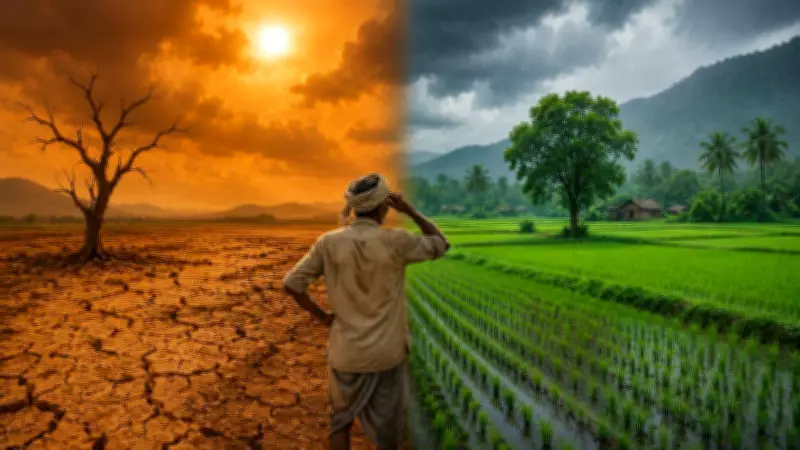
Monsoon Deficit and El Nino Risks Intensify
India is facing one of its most challenging monsoon seasons in over a decade, with the India Meteorological Department (IMD) projecting rainfall at just 90% of the Long Period Average (LPA). This would mark the first below-normal monsoon in three years and the weakest forecast since 2015. A severe heatwave has already strained farms, power grids, and daily life.
According to IMD data, the country received only 42.6 mm of rainfall between June 4 and June 18, against the normal 72.2 mm, a 41% shortfall. Central India has been hit hardest with a 67% deficit, while east and northeast India are down by 42%. The southern peninsula has 22% less rainfall, and northwest India is 6% below average. The IMD revised its forecast from 92% to 90% of LPA.
What Is El Nino and Why It Matters
El Nino is a natural climate phenomenon where sea surface temperatures in the central and eastern Pacific Ocean become warmer than normal. It disrupts global atmospheric circulation and historically weakens the Indian monsoon. Since 1950, 16 El Nino years have occurred, seven of which saw below-normal monsoon rainfall, according to the Ministry of Earth Sciences.

The World Meteorological Organization (WMO) estimates an 80% probability of El Nino developing between June and August and a 90% chance thereafter. Scientists warn of a potential "super El Nino," with the US National Oceanic and Atmospheric Administration (NOAA) citing a one-in-four chance of a particularly strong event. Dr. Paul Roundy noted "real potential for the strongest El Nino event in 140 years," while Dr. Andy Hazelton said "all models and observations point to a very strong El Nino."
Impact on Agriculture and Food Prices
Agriculture employs nearly 46% of India's workforce, and nearly half of cultivated land depends on rainfall. Poor rains reduce soil moisture, delay sowing, and affect key kharif crops like rice, pulses, cotton, and sugarcane. As of June 12, total kharif sowing area stood at 84.6 lakh hectares, down 3.9% from last year, with pulses and cotton acreage declining by 43.2% and 28%, respectively, according to 360 ONE Capital Research.
Food inflation has already risen, with retail inflation at 3.9% in May, up from 3.5% in April. Vegetables, fruits, edible oils, and spices have become costlier. SBI Research expects tomato prices to shoot up due to El Nino. Sachchidanand Shukla, Group Chief Economist at Larsen & Toubro, said, "Among tomatoes, onions and potatoes, SBI Research expects the prices of tomatoes to shoot up due to El Nino. No impact on potato prices is seen, while onion prices tend to trouble the common man even in case of a normal monsoon year."
Reservoir Levels Offer Some Relief
Despite the weak start, reservoir levels provide a buffer. Live storage as of June 11 stood at 28.3% of total capacity, about 16% above the ten-year average, according to 360 ONE Capital. Healthy water reserves could aid irrigation if rainfall remains patchy. However, much depends on July and August rainfall, which account for the bulk of seasonal precipitation.
Broader Economic Risks
The Reserve Bank of India raised its FY27 inflation forecast to 5.1% from 4.6%, reflecting El Nino risks. BNP Paribas noted that declining crude oil prices have improved the inflation outlook, but weather disruptions pose a larger threat. Lower agricultural incomes reduce spending in rural areas, affecting industries dependent on rural demand. Data from CMIE shows personal and home-care companies recorded 8.6% revenue growth during El Nino years, versus 12.2% in non-El Nino years.
Heatwaves Add to Economic Strain
Heatwaves are emerging as a major threat alongside rainfall deficits. According to the Lancet Countdown, Indians experienced an average of 19.8 heatwave days in 2024, the warmest year on record, with income losses of nearly $194 billion due to reduced labor productivity. Research by Piyush Narang and Ashok Gadgil found that one day of extreme heat could lead to 3,400 excess deaths nationwide, while a five-day heatwave could cause almost 30,000 deaths.
The dairy sector is also affected, with milk prices rising 2-3% in May. Industry executives warn of another increase in July or August if deficient rainfall affects fodder availability.

Can India Handle a Weak Monsoon Better?
Economists believe India is better prepared than a decade ago. According to Barclays chief India economist Aastha Gudwani, around 55% of India's gross cropped area is now irrigated, up from 40% in 2010-11. Reservoir levels are 29% above the ten-year average. HSBC economists argue that reservoir levels have become more important than rainfall alone for food production and inflation. However, HSBC's Pranjul Bhandari cautioned, "We find that the probability of high temperatures is stronger than the probability of low rains, and the quantum of rise in temperatures during El Nino years is rising."
The NSE noted, "For 2026, the key challenge is the emergence of El Nino risk," with a 60% probability of deficient rainfall and 24% probability of below-normal rainfall. The coming weeks will be crucial as India watches the progress of the rains.