Cuba, the Caribbean island nation with a long history of economic hardship, is now experiencing a dramatic and accelerated collapse of its economy. The situation has deteriorated to a point where experts describe it as being in a state of "free fall," marked by severe shortages, crippling blackouts, and a massive exodus of its citizens.
A Perfect Storm of Economic Pressures
The current crisis is not the result of a single factor but a confluence of devastating pressures. The Cuban economy contracted by an estimated 1-2% in 2023, and projections for 2024 are equally grim. A key pillar of the economy, tourism, has failed to recover to pre-pandemic levels, creating a critical shortage of foreign currency.
This is compounded by the enduring impact of the U.S. economic embargo, which has tightened in recent years. Furthermore, Cuba's main political and economic ally, Venezuela, has drastically reduced its subsidized oil shipments due to its own economic woes. The global inflation surge has also hit the import-dependent nation hard, making essential goods prohibitively expensive.

Perhaps the most visible sign of the crisis is the energy sector. Cubans are enduring daily blackouts that last up to 20 hours in some regions. These power cuts paralyze businesses, spoil food, and make daily life a relentless struggle. The government, led by President Miguel Díaz-Canel, has been forced to implement austerity measures, including raising fuel prices by over 400% and increasing electricity tariffs, which further squeeze an already impoverished population.
The Human Cost: Exodus and Desperation
The economic free fall has triggered one of the largest migration waves in Cuba's modern history. In the last two years, more than 5% of the island's population—over half a million people—have left, primarily for the United States. This exodus represents a significant brain drain, stripping the country of doctors, teachers, and skilled professionals.
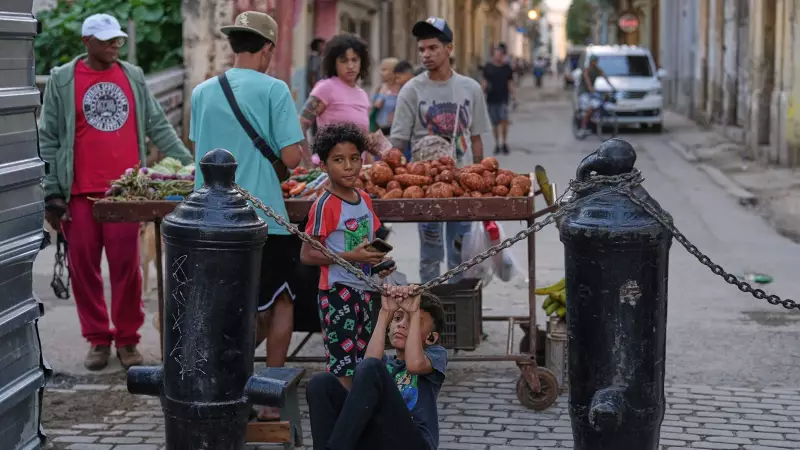
For those who remain, life is defined by scarcity. Citizens spend hours in lines for basic necessities like food and medicine. The informal market, or "black market," has become the primary source for many goods, but at prices far beyond the reach of those earning state salaries. The average monthly salary is equivalent to roughly $20, which is utterly insufficient for survival without remittances from abroad or access to foreign currency.
Government Reforms and a Bleak Outlook
The Cuban government has acknowledged the severity of the crisis. It has promoted some reforms, such as allowing more private small and medium-sized enterprises (SMEs) and encouraging foreign investment. However, analysts argue these measures are too limited, too slow, and often hampered by excessive bureaucracy and ideological constraints.
Major economic overhauls, like a planned unification of the country's complex dual currency system, have been repeatedly delayed. The lack of decisive action, combined with the weight of external sanctions and internal inefficiencies, paints a bleak picture for the immediate future. The economy shows no clear signs of a turnaround, and the suffering of the Cuban people continues to deepen.
In essence, Cuba is trapped in an economic downward spiral where shortages lead to lower productivity, which in turn worsens shortages and fuels social unrest and migration. Without significant structural changes and a relaxation of external pressures, the nation's path out of this free fall remains perilously unclear.