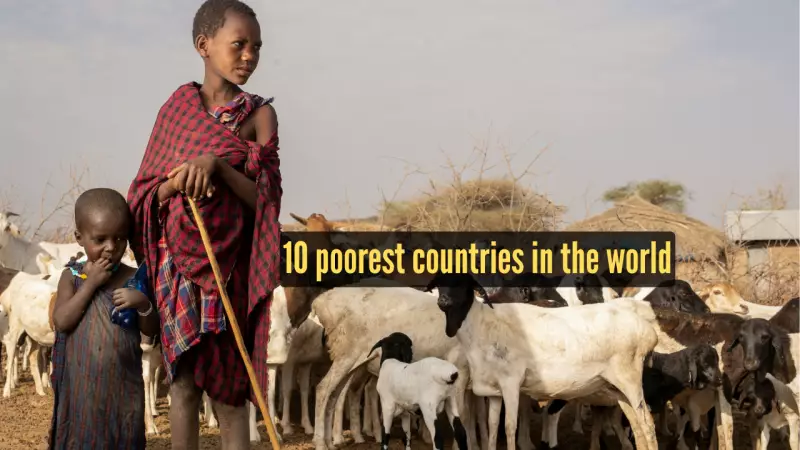
In an era of unprecedented technological advancement and global connectivity, a stark and sobering reality persists for millions. While the world has never been richer, the chasm between the haves and have-nots remains vast and deeply entrenched. According to the latest Economic Data ranking for 2025 by Global Finance Magazine, a list of the ten poorest countries highlights a global paradox of immense wealth existing alongside crushing deprivation.
The Complex Measure of Poverty
Quantifying poverty is not straightforward. While Gross Domestic Product (GDP) per capita offers one perspective, economists often turn to Purchasing Power Parity (PPP) to gauge what people can actually afford with their local currency. The figures are jarring. In 2025, the average annual purchasing power in the world's wealthiest nations exceeds $118,000. In contrast, citizens in the poorest nations survive on roughly $1,600 per year.
The roots of this extreme poverty are rarely singular. A toxic cocktail of historical legacies, corruption, weak institutions, armed conflict, climate disasters, and unsustainable debt burdens conspire to trap nations in a cycle of hardship. The Covid-19 pandemic brutally exposed these fault lines, reversing decades of hard-won progress and pushing millions back into extreme poverty. The subsequent recovery has been hampered by inflation, war-driven supply shocks, and a decline in crucial foreign aid.

The 2025 List: Nations in the Grip of Adversity
The ranking, based on PPP-adjusted GDP per capita, paints a picture of nations struggling against overwhelming odds.
1. South Sudan
Topping this distressing list is South Sudan, the world's youngest and poorest country. Despite possessing vast oil reserves, its people are besieged by conflict, corruption, and climate disasters. Rampant inflation has decimated savings, while violence and recurrent floods consistently disrupt farming, making poverty a near-universal experience.
2. Burundi
Generations of poor governance, scarce resources, and a devastating civil war have inflicted long-term damage on this small Central African nation. Most citizens rely on subsistence farming, electricity is a rare luxury, and inflation has soared uncontrollably. Even minor economic gains are nullified by skyrocketing food prices and bleak future prospects.
3. Central African Republic
Endowed with diamonds, gold, and timber, the Central African Republic sees little of this wealth trickle down to its population. Large swathes of territory remain under the control of armed groups, making any progress fragile. Despite some promising economic growth, poverty is a deeply rooted feature of daily life.
4. Yemen
Years of relentless war have shattered Yemen's economy and infrastructure. Oil revenues have collapsed, food prices have exploded, and hunger is rampant. For millions of Yemenis, poverty is inseparable from conflict, with daily existence defined by acute shortages, displacement, and profound uncertainty.
5. Mozambique
On paper, Mozambique should be thriving, blessed with natural gas reserves, a long coastline, and strategic trade routes. In reality, its progress has been repeatedly derailed by insurgency, disputed elections, and climate disasters. Economic growth has slowed drastically, and the benefits of past booms have largely failed to reach ordinary citizens.
6. Malawi
Malawi's heavy reliance on rain-fed agriculture makes it acutely vulnerable to climate shocks. Political stability has not translated into economic security, as runaway inflation, a plummeting currency, and food shortages bear down on the population. Soaring prices have turned even the most basic Malawian meals into a luxury for many.
7. Democratic Republic of the Congo
The DRC epitomizes the cruel paradox of poverty amid plenty. It is rich in the rare earth minerals critical for the global green energy transition, yet its people remain desperately poor. Decades of violence, corruption, and crumbling infrastructure have ensured that mineral wealth does not translate into public welfare. The opportunity is immense, but the gap between resource potential and actual prosperity is even greater.

8. Somalia
Somalia's narrative is often dominated by strife, though resilience persists. Amid droughts, floods, and insurgency, reforms and regional trade initiatives are slowly emerging. Yet, an estimated 70% of Somalis live below the international poverty line, and daily life is a constant negotiation with risk and climatic extremes.
9. Liberia
Africa's oldest republic bears deep scars from civil wars and decades of economic neglect. Recent elections have injected fresh hope, and growth has resumed post-pandemic. While poverty rates have declined, daily life remains precarious. High unemployment and minimal infrastructure continue to hinder a more robust and inclusive recovery.
10. Madagascar
Famed for its unique biodiversity, Madagascar faces severe human challenges. Political instability since independence has stifled progress, with about three-quarters of the population living in poverty. Climate vulnerability exacerbates every difficulty: droughts kill crops and floods uproot families. Even when economic growth appears on paper, it seldom reaches villages dependent on precarious agriculture.
A Future Beyond the Numbers
It is critical to recognize that these countries are not poor due to a lack of potential or resources. They are poor because a confluence of history, politics, and global shocks has created a trap that is nearly impossible to escape. The nations on this list may shift positions from year to year, but for the millions of people living within their borders, the story of struggle remains painfully consistent. The 2025 ranking serves as a powerful reminder that in a world of plenty, the mission to bridge the inequality gap is far from over.