

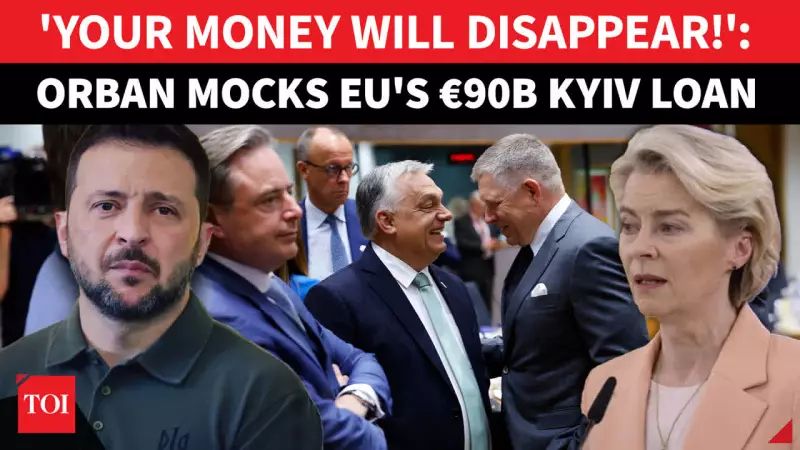
Hungarian Prime Minister Viktor Orban has launched a scathing attack on European Union leadership, accusing key figures of acting as 'warmongers' to prolong the conflict in Ukraine. His criticism centres on a massive new EU financial package for Kyiv, which he labels as reckless and wasteful.
Orban's Blunt Accusations Against EU Elites
Speaking at recent campaign events and public appearances, Orban did not mince words. He pointed fingers directly at EU politicians, major weapons manufacturers, and international bankers. Orban claims these groups are actively pushing to extend the war with Russia, driven by their own interests. He warned that such policies are not only reckless but also risk dragging the entire European continent into a much deeper political and economic crisis.
The €90 Billion 'Reckless' Loan at the Heart of the Dispute
The immediate trigger for Orban's outburst is a proposed EU loan to Ukraine worth a staggering €90 billion. From Orban's perspective, this enormous sum represents a profound misallocation of European resources. He argues that the money would be far better spent on critical domestic infrastructure projects within EU member states. Orban expressed scepticism that the funds would effectively reach Ukraine, suggesting they would instead disappear into the quagmire of corruption or simply be lost to the ravages of war, which he starkly described as "wasting money on ruins."

Deepening Fractures Within the European Union
Orban's sharp remarks, made on December 23, 2025, highlight the significant and growing divisions inside the European bloc. These splits are not just about the Ukraine war but also about the fundamental issues of finance, sovereignty, and the future strategic direction of Europe. The debate extends to other contentious proposals, such as the use of frozen Russian assets to fund Ukraine's defence. With Brussels remaining deeply divided on these matters, Orban's stance underscores a clear east-west rift within the EU, pitting his vision of national interest and diplomacy against the prevailing consensus for continued military and financial support for Kyiv.
The Hungarian leader's comments signal a tough political battle ahead as EU institutions try to maintain a united front. His 'name and shame' tactic puts public pressure on those he views as proponents of endless conflict, setting the stage for further intense negotiations and highlighting the fragile state of European unity in a time of prolonged war.






