

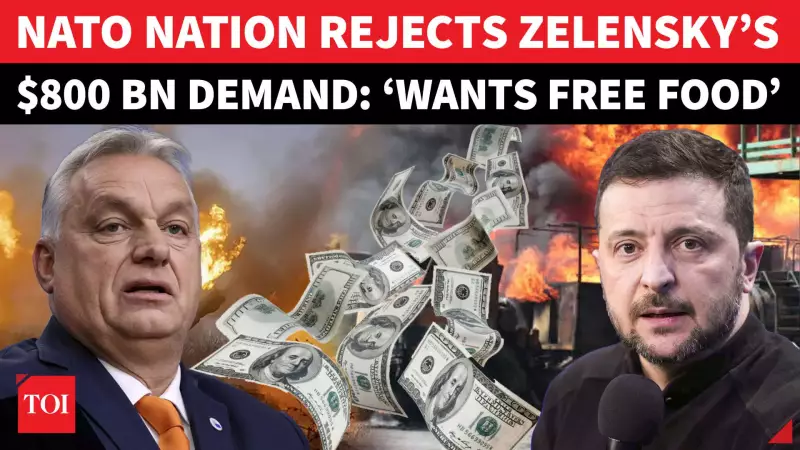
In a move that threatens to deepen fractures within the European Union, Hungary has taken a firm stand against Ukraine's aspirations to join the bloc. Budapest has declared it will block Kyiv's accession, even if it requires acting unilaterally, casting a long shadow over Ukraine's geopolitical future and its massive financial demands for reconstruction.
Budapest's Firm 'No' to Kyiv's Ambitions
Gergely Gulyas, who leads the Hungarian Prime Minister's office, made the country's position unequivocally clear. He stated that the goal of Ukraine's proposed EU entry by 2027 is both "impossible and unacceptable" from Hungary's perspective. This outright rejection positions Hungary as the most significant political obstacle within the EU to Ukraine's long-term strategic ambition of European integration, a goal that has gained urgency since the conflict with Russia began.
Criticism of the $800 Billion Reconstruction Plan
Beyond the membership issue, Gulyas launched a sharp critique of the financial aid requested by Ukrainian President Volodymyr Zelensky. He specifically referenced Zelensky's appeal for a staggering $800 billion in reconstruction funds. The Hungarian official warned that agreeing to such a colossal financial package would essentially mean European nations bankrolling Ukraine for a decade or more. "Wanna live off Europe for 10 years?" was the pointed rhetorical question he posed, highlighting concerns about the sustainability and burden of such aid on EU economies.

Widening Rifts in the European Union
These remarks, made on January 08, 2026, are not isolated but signal a growing and potentially disruptive division among EU member states. The bloc is grappling with unified decisions on several fronts related to Ukraine: its future membership in the union, the scale and management of long-term funding commitments, and the broader geopolitical strategy of eastward enlargement. Hungary, under Prime Minister Viktor Orban, is increasingly positioning itself as a vocal sceptic, challenging the consensus-driven approach of the EU on support for Kyiv. This stance creates significant hurdles for formulating a cohesive European response to the ongoing situation.
The development underscores a complex reality where European solidarity with Ukraine is being tested by internal disagreements over costs, timelines, and strategic priorities. As Hungary digs in its heels, the path for Ukraine toward EU integration appears more fraught and uncertain than ever.






