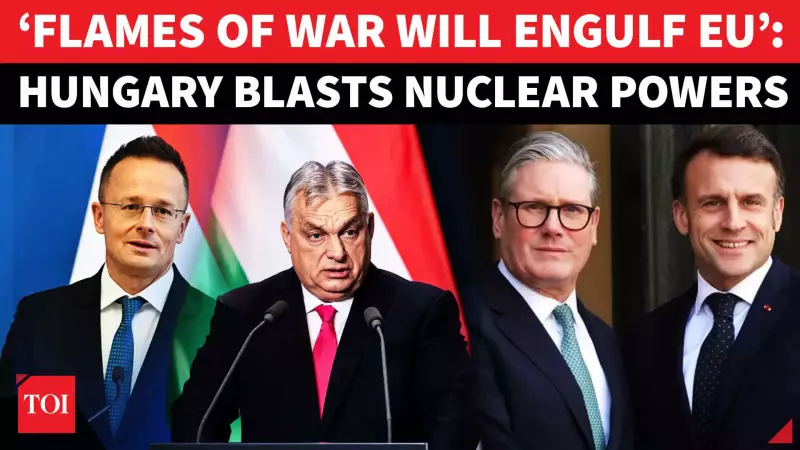
Hungary's top diplomat has launched a fierce attack on key European allies, accusing them of pushing the continent towards a dangerous escalation in the ongoing Russia-Ukraine war. The criticism comes after Britain and France indicated a readiness to provide troop commitments linked to security guarantees for Kyiv.
Szijjártó's Sharp Rebuke Against NATO Allies
Speaking on behalf of the Hungarian government, Foreign Minister Péter Szijjártó did not mince words. He sharply criticised the leaders of the United Kingdom and France for their recent signals about potential troop deployments to Ukraine. Szijjártó argued that such moves represent a severe provocation and risk drawing NATO nations into a direct, full-scale confrontation with Russia.
The minister's remarks, made on January 11, 2026, underscore Budapest's long-standing and firm opposition to military escalation. He accused the political leadership in Brussels of succumbing to what he termed "war fanaticism", suggesting that a desire for conflict was overshadowing rational diplomacy and the pursuit of peace.

Budapest's Stance: Peace Over Escalation
In his statement, Szijjártó made Hungary's priorities unequivocally clear. He insisted that for Budapest, the foremost goals are ensuring national security and achieving a peaceful resolution to the conflict. The Hungarian government views the potential deployment of Western troops as a reckless step that could fundamentally alter the nature of the war, transforming it from a regional conflict into a continent-wide war.
This position highlights the deep fissures within the European Union and NATO regarding the strategy towards Ukraine. While several member states advocate for increased military support to help Ukraine defend itself, Hungary has consistently warned against actions it believes could entangle the entire alliance in a broader, more dangerous conflict dynamic with Moscow.
Implications for European Unity and Strategy
The public condemnation from a sitting EU foreign minister points to the significant political tensions brewing behind the scenes. Szijjártó's warning is not just rhetorical; it reflects a tangible fear in Budapest that policies championed by Paris and London could have catastrophic consequences for all of Europe, including nations like Hungary that share a border with the conflict zone.
By taking a firm stand against the troop proposals, Hungary is positioning itself as a vocal advocate for de-escalation and diplomacy. This move further solidifies its unique stance within the Western alliance, often at odds with the mainstream consensus. The episode sets the stage for potentially difficult debates within the EU and NATO councils, as leaders grapple with balancing robust support for Ukraine against the terrifying risk of a direct war with a nuclear-armed Russia.
The coming weeks will reveal whether the warnings from Budapest temper the ambitions of other European capitals or if the divide over military strategy continues to widen.