

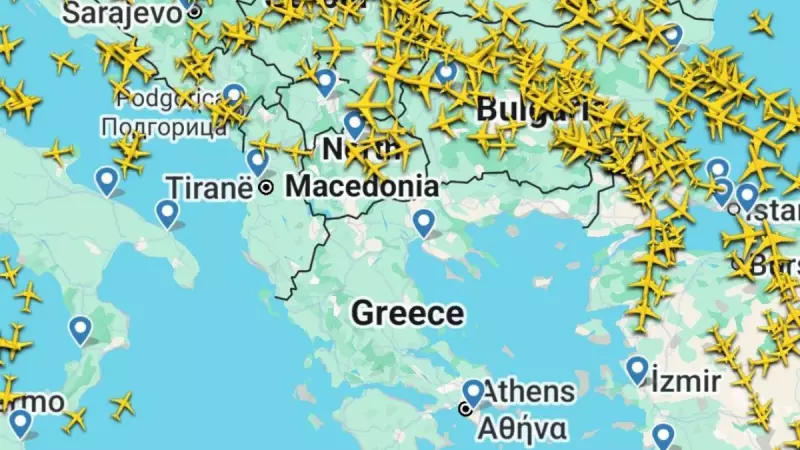
In an unprecedented event that brought Greek air travel to a complete standstill, all airports across the nation were forced to shut down on Friday. The massive disruption was triggered by critical issues with the radio frequencies essential for communication between air traffic controllers and aircraft. This technical failure led to the grounding of all flights, creating widespread chaos for thousands of passengers and sending shockwaves through European aviation networks.
The Complete Grounding: A Nation's Skies Go Silent
The crisis began on the morning of Friday, January 4, 2026. Aviation authorities in Greece were compelled to implement a full-scale closure of the country's airspace. The root cause was identified as severe malfunctions and interference within the radio communication systems. These systems are the lifeline for air traffic control (ATC), allowing controllers to guide planes safely during takeoff, flight, and landing.
Without reliable radio contact, ensuring the safety of aircraft became impossible. Consequently, the Hellenic Civil Aviation Authority (HCAA) had no choice but to halt all flight operations. This affected every single airport in Greece, from the major international hub of Athens International Airport (AIA) to popular tourist gateways on islands like Crete, Rhodes, and Mykonos. Both inbound and outbound flights were canceled, leaving terminals filled with stranded and frustrated travelers.

Immediate Fallout and Passenger Chaos
The immediate impact of the shutdown was severe and instantaneous. Hundreds of flights were canceled, disrupting the travel plans of tens of thousands of people. Airports transformed into scenes of confusion as passengers scrambled for information. Long queues formed at airline desks, but with the core ATC system non-operational, rebooking options were extremely limited.
Airlines, both international and domestic, were forced to issue widespread cancellations. Carriers such as Aegean Airlines, Olympic Air, and numerous European budget and flag airlines had to suspend their services to and from Greece indefinitely. The ripple effect was felt across Europe, as flights destined for Greek airports were held at their points of origin or diverted to other countries, further complicating airline schedules continent-wide.
Authorities and airport staff worked to manage the crowds, providing limited updates as technicians raced against time to diagnose and fix the complex radio frequency problems. The Greek government was reported to be in emergency sessions, treating the situation as a major national incident due to its impact on safety, tourism, and the economy.
Investigations and Broader Implications for Aviation Safety
As the ground stop continued, the primary focus shifted to the technical investigation. Experts were probing the exact nature of the radio frequency "issues" cited in initial reports. Potential causes under scrutiny included:
- Hardware failure in critical ATC communication infrastructure.
- Unprecedented levels of electromagnetic interference from an external source.
- Potential cyber-security incidents disrupting communication networks.
- Software glitches during a system update or maintenance procedure.
This incident highlights the immense vulnerability of modern aviation to single points of failure. Radio communication is a non-negotiable component of flight safety, and its failure on a national scale is an extremely rare and serious event. It is expected to prompt urgent reviews of backup systems and contingency plans not only in Greece but also by aviation regulators across the European Union and globally.
The economic and reputational damage for Greece, a country heavily reliant on tourism, is significant. The peak travel period may have passed, but such a complete shutdown harms traveler confidence and can have lingering effects on the industry. For passengers, it serves as a stark reminder of the complex, technology-dependent nature of air travel, where a technical fault can bring an entire nation's connectivity to a halt.

As of the latest reports on January 4, 2026, flights remained grounded while engineers worked to restore the vital radio links. No timeline for a full resumption of services was immediately available, leaving the world watching as Greece tackled one of its most severe aviation crises in recent history.





