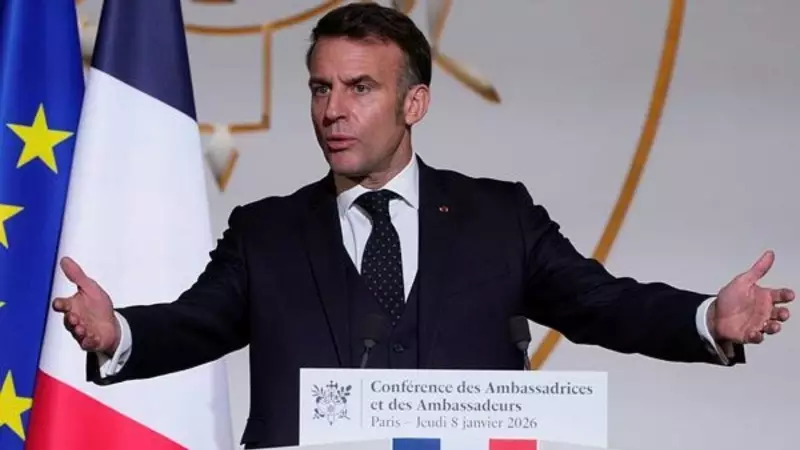
In a significant diplomatic rebuke, the leaders of France and Germany have jointly condemned recent statements by former US President Donald Trump regarding the NATO military alliance. The remarks, which suggested the United States might not defend allies failing to meet defence spending targets, have sparked a wave of concern across European capitals.
European Leaders Issue Strong Condemnation
French President Emmanuel Macron led the charge, delivering a pointed critique of Trump's position. Macron described the comments as a stark signal that America's priorities were shifting away from its traditional European partners. He emphasized that such statements undermined the fundamental principle of collective defence enshrined in NATO's Article 5, which considers an attack on one member an attack on all.
Echoing this sentiment, German Chancellor Olaf Scholz expressed deep unease. Scholz stressed that the alliance's strength has always been rooted in unwavering solidarity. He warned that casting doubt on mutual defence commitments weakens the entire security architecture that has maintained peace in Europe for decades. The German leader reiterated his nation's commitment to the two percent of GDP defence spending target, a point of frequent contention with Washington.

The Context of Trump's Controversial NATO Comments
The controversy stems from a campaign speech where Donald Trump recounted a conversation he claimed to have with the leader of a major NATO country. He stated he would encourage Russia to do whatever it wants to nations that are delinquent in their financial contributions to the alliance. This narrative, presented as a bargaining tactic, was immediately interpreted by European officials as a dangerous abandonment of the alliance's core tenets.
Analysts note that this incident is not isolated but reflects a broader pattern from Trump's first term, where he repeatedly questioned the value of NATO and pressured allies to increase their military budgets. The fear in Paris, Berlin, and other European capitals is that a potential second Trump presidency could see the United States significantly disengage from its transatlantic security guarantees.
Implications for Global Security and European Defence
The forceful response from France and Germany highlights a growing European anxiety about American reliability. Macron has been a long-time proponent of European strategic autonomy, arguing that the continent must develop its own defence capabilities to ensure its security regardless of US political shifts. Trump's latest remarks are likely to add significant fuel to this ongoing debate.
In practical terms, European nations are now faced with a dual challenge: accelerating efforts to build a more self-sufficient defence framework while simultaneously working to reassure the American political establishment of their commitment to burden-sharing. The situation creates a delicate balancing act for leaders like Scholz and Macron, who must navigate domestic political pressures, relations with Washington, and the urgent need to support Ukraine against Russian aggression.
The unified front presented by Paris and Berlin is particularly noteworthy, signalling a potential convergence on defence policy between two nations that have sometimes differed on the pace of European military integration. Their joint criticism underscores a shared assessment of the threat posed by any weakening of the transatlantic bond. As the US election cycle progresses, European leaders are preparing for a future where the foundational alliances of the post-World War II order may no longer be taken for granted.