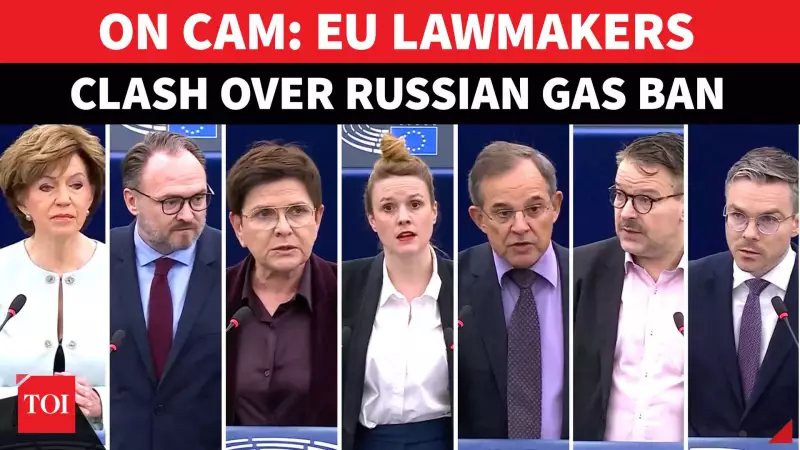
A heated debate in the European Parliament over a proposed binding ban on Russian gas imports has drawn a dismissive reaction from Russian President Vladimir Putin, who reportedly laughed off the confrontation. The clash among European Union lawmakers underscores the deep divisions within the bloc as it strives to end its energy dependence on Moscow.
Strasbourg Showdown: A Historic Move or Costly Mistake?
The debate, which took place in Strasbourg on December 17, 2025, centred on implementing a ban under the EU's REPowerEU strategy. Proponents of the measure hailed it as a historic and necessary step to finally sever the energy weapon that Moscow has long wielded against Europe. They argued it would cement the bloc's energy sovereignty and security for the future.
However, the move faced fierce criticism from several quarters. Leaders and lawmakers from countries including Italy, France, and Finland voiced strong concerns. The critics warned that an abrupt and binding ban could send energy costs soaring for consumers and industries alike. They argued it would cripple the competitiveness of European manufacturing and potentially replace one dependency with another—this time on more expensive liquefied natural gas (LNG) from the United States.

Putin's Dismissive Laughter and Wider Geopolitics
The internal European strife was met with apparent amusement from the Kremlin. Reports indicate that President Vladimir Putin laughed at the faceoff, viewing the discord as a sign of European weakness and the impracticality of completely cutting off Russian energy. This reaction highlights the ongoing geopolitical tensions, where energy remains a central battleground.
The debate in Strasbourg is not happening in isolation. It coincides with other significant global events, including the situation in Venezuela and the ongoing war in Ukraine. In a related development, President Putin has rejected a Christmas ceasefire offer from Ukrainian leader Volodymyr Zelensky, stating that Russia will not give Ukraine a breather. This firm stance further complicates the European energy calculus, as stability in the region remains elusive.
The Road Ahead for European Energy Security
The sharp divide in the EU Parliament reveals the immense challenge Europe faces in balancing moral, political, and economic imperatives. The key questions remain unresolved:
- Can Europe afford a full ban without devastating its economy?
- Will alternative supplies from the US and other partners be reliable and affordable in the long term?
- How will this decision impact the daily lives of European citizens already grappling with high costs?
The outcome of this debate will shape the continent's energy security and geopolitical stance for years to come. While the intent to cripple Russia's war machine is clear, the path to achieving it without self-inflicted harm is fraught with complexity, as the heated exchanges in Strasbourg vividly demonstrated.