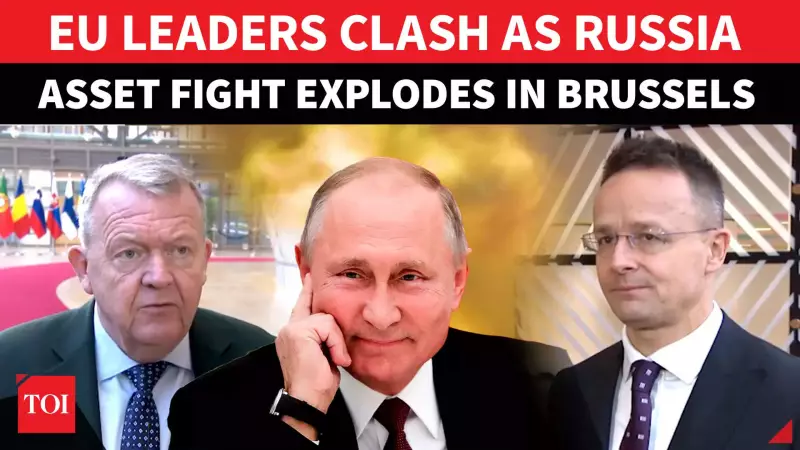
A major clash erupted among European Union leaders in Brussels, exposing sharp divisions over a contentious plan to use frozen Russian assets to finance Ukraine's war effort. The debate, which took place on December 15, 2025, has put the bloc's unity and resolve under a harsh spotlight.
Hungary Sounds The Alarm On 'Reckless' Move
Hungary led the charge against the proposal, issuing a stark warning that seizing assets belonging to the Russian state could be seen as a direct provocation by Moscow. Hungarian officials labelled the plan as "reckless and dangerous" for Europe's own future security, arguing it risked escalating the conflict into a direct confrontation between NATO and Russia. This position highlights the deep-seated fears within some EU capitals about the potential legal and security consequences of such an unprecedented step.
A Test Of European Unity And Resolve
On the other side of the argument, several member states pushed back forcefully. They contended that failing to act decisively while Ukrainian forces face increasing pressure on the battlefield would make Europe appear weak and indecisive. For these nations, the frozen assets—amounting to hundreds of billions of euros—represent a crucial resource to sustain Kyiv's defence without placing the entire financial burden on European taxpayers. The dispute has become a critical test for the EU's credibility on the global stage.

Fault Lines Over Law, Security, And Strategy
The heated discussion laid bare fundamental disagreements that go beyond immediate funding. The key points of contention include:
- Legal Risks: The complex legality of permanently seizing sovereign assets versus just using the profits they generate.
- Security Repercussions: Fears of Russian retaliation against European interests.
- Strategic Autonomy: Debates over Europe's role and its dependence on other allies in supporting Ukraine.
As the war continues with no end in sight, this internal EU struggle over the frozen Russian assets is more than a financial debate. It is a defining moment that will shape the bloc's cohesion, its strategic posture, and its ability to present a united front in a time of prolonged crisis.