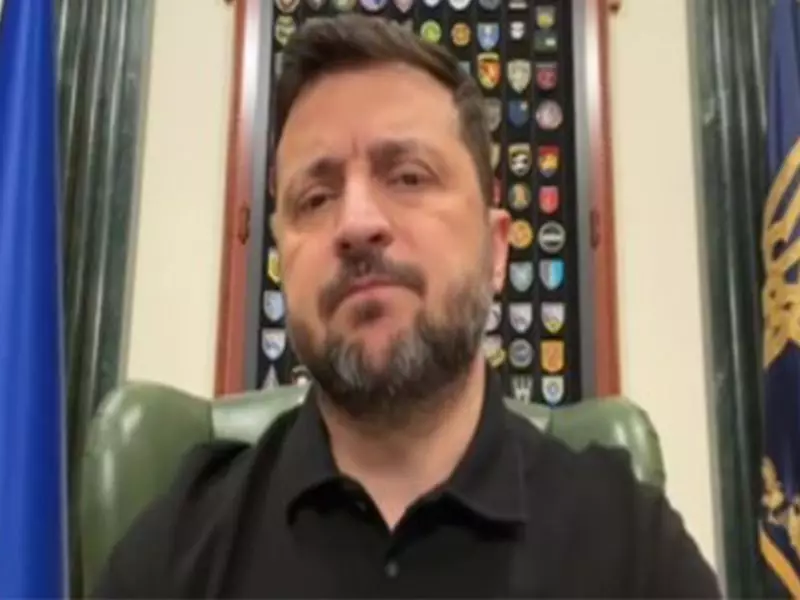
Ukrainian President Volodymyr Zelenskyy has issued a powerful and urgent call to the world, stating that only a combined force from Europe and the United States can stop what he termed the "madness" of Russian President Vladimir Putin. His remarks underscore the escalating pressure on Western allies to provide more decisive military support as the war grinds on.
Zelenskyy's Direct Appeal for a United Front
Speaking from the heart of a nation under siege, President Zelenskyy left no room for ambiguity. He declared that Russia "must be stopped" and that this objective is paramount for global security. His statement, delivered with characteristic resolve, directly challenges the international community to move beyond incremental aid and consider a more unified, potent military response. The Ukrainian leader argued that fragmented support, while valuable, is insufficient to counter the full-scale assault from Moscow.
Zelenskyy's appeal highlights a critical juncture in the conflict. He believes that the collective strength of Western democracies, if marshaled effectively, represents the only credible deterrent to Russian ambitions. This call for a combined force is seen as a strategic push to solidify the alliance backing Ukraine and to close any perceived gaps in the defensive front against Russian advances.

The Context of Escalating Conflict and Western Support
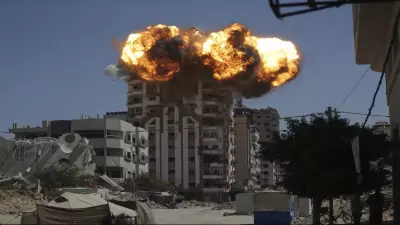
The Ukrainian President's stark warning comes against a backdrop of relentless Russian military operations. Cities continue to face bombardment, and frontline positions are subject to intense pressure. Despite significant deliveries of weaponry from individual NATO members and the European Union, Zelenskyy contends that the response needs to be more coordinated and formidable to alter the war's trajectory decisively.
The concept of a "combined force", as articulated by Zelenskyy, does not necessarily imply the deployment of Western troops on the ground in a combat role—a red line for many allies. Instead, it is widely interpreted as a plea for an unprecedented level of military integration in terms of planning, intelligence sharing, logistics, and the provision of advanced weapons systems. The goal is to create a seamless support structure that empowers Ukrainian forces to defend their sovereignty effectively.
This position puts additional focus on upcoming decisions in Western capitals regarding advanced aircraft, longer-range missiles, and enhanced air defense systems. Zelenskyy's rhetoric is calculated to galvanize public opinion and political will in Europe and the US, framing the war in Ukraine not as a regional dispute but as a battle for the future of democratic order.
Global Implications and the Path Forward
Zelenskyy's message carries profound implications for international diplomacy and security architecture. By explicitly stating that only a united West can stop Putin, he is reinforcing the idea that the war's outcome will define global power dynamics for decades. It is a direct appeal to the strategic interests of the US and European nations, suggesting that failure in Ukraine would embolden other authoritarian regimes worldwide.
The call also serves to highlight the internal debates within the EU and NATO about the pace and scale of assistance. While there is broad consensus on supporting Ukraine, differences remain on the specifics of weapon deliveries and the long-term vision for ending the conflict. Zelenskyy's latest intervention aims to tip these debates toward a more assertive stance.
Ultimately, the Ukrainian President's appeal frames the conflict in stark, moral terms. It is no longer just about territorial integrity but about halting what he describes as irrational aggression. The world's response to this call for a combined force will be a critical test of the liberal international order's resolve and its ability to confront unprovoked expansionism in the 21st century.