

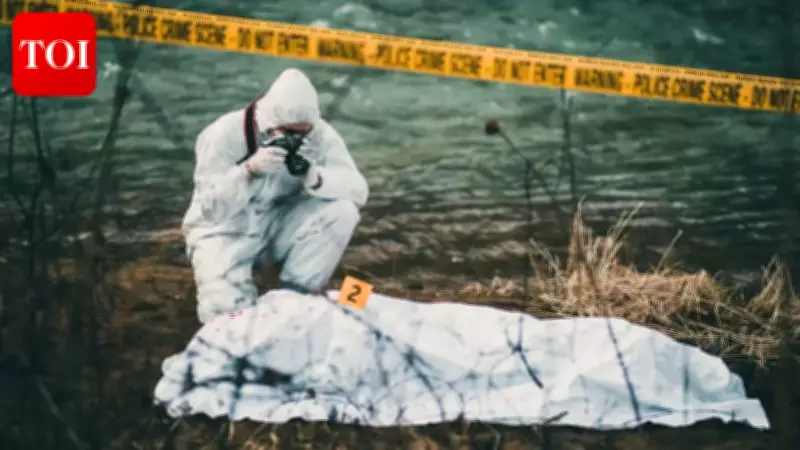
Authorities have finally identified the remains of a man whose body was discovered deep in Washington's Olympic National Park over two decades ago. Forensic scientists conducted tests 26 years after the remains were first found in a sleeping bag in the park. The tests helped identify the remains of a man last seen in 1998, officials said.
The remains, found inside a sleeping bag in a secluded area of the park, have been confirmed as those of Joseph Louis Serrao Jr., a man originally from Hawaii who was last heard from in 1998. The man had been in Washington before going missing, his family told Othram, the forensic laboratory that assisted National Park Service investigators in solving his case. They reported losing contact with him from that point on.
"This case remained unresolved for nearly 30 years, but investigators never lost sight of the goal of identifying this individual and finding answers for his family. I'm proud of the persistence and collaboration that made this identification possible, and I hope it brings some measure of closure to those who have spent so many years wondering what happened to Joseph," Debra Flowers, deputy chief of the Park Service's Criminal Investigative Division, said in a statement.

In July 2000, a researcher discovered the skeletal remains along the Sol Duc River in a remote section of the national park. The body was found inside a tent, secured within a sleeping bag, alongside various personal items, including binoculars, a day pack, a shoulder bag, a folding saw and winter clothing, according to the park service and the laboratory. It appeared as if the individual had been living or camping in the area.
When experts first examined the remains, they determined the deceased was likely a man in his thirties or forties who had died at least six months, and possibly up to two years, before discovery. Investigators later learned that the remains were of a man born in December 1960 and would have been in his late 30s at the time of death. However, despite these insights, investigators hit a wall. Without clear fingerprints or other definitive evidence, authorities struggled to establish the victim's identity.
The identity of the individual remained unknown until recently. The breakthrough came in 2024 when an anthropologist working with the medical examiner's office sent a DNA sample to Othram. In 2025, using forensic genealogy, a technique that traces living relatives through DNA analysis, the lab was able to find family members. Officials contacted the man's relatives living across multiple states, including Hawaii, and then compared and matched their DNA samples to identify the remains.






