

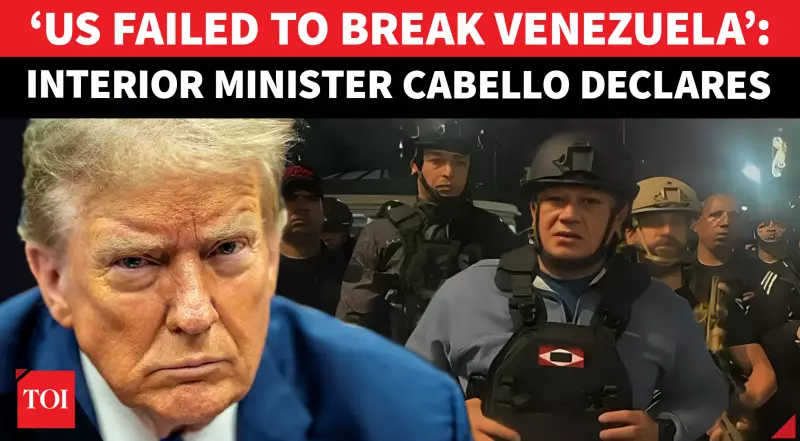
Venezuela's political leadership has called for national unity and resistance following a dramatic military intervention by the United States, which included airstrikes on the capital and resulted in the capture of President Nicolás Maduro. The country's second-in-command, Interior Minister Diosdado Cabello, addressed citizens from Caracas on January 3, 2026, urging calm and vowing that the nation would overcome what he termed an illegal invasion.
Cabello's Address to a Nation Under Attack
Speaking after personally inspecting the damage from the American offensive, Diosdado Cabello described the U.S. airstrikes as a "criminal terrorist attack." He stated that the strikes deliberately targeted military facilities, critical infrastructure, and civilian areas in and around Caracas. Cabello assured the public that Venezuela's security forces and military were fully deployed and prepared to respond to any further threats to the country's stability and sovereignty.
Visual evidence from the scene, including footage from La Carlota airport, showed significant scorched areas and damage caused by explosions. Reports also confirmed sightings of low-flying military aircraft during the operation. In his speech, Cabello framed the crisis not merely as a military incursion but as a direct assault on Venezuela's right to self-determination and peace.

Leadership in Crisis: A Call for Trust and Vigilance
The interior minister's primary message was a plea for public trust in the country's remaining political and military command structure. With President Maduro confirmed captured by Washington, Cabello positioned himself as the figurehead for national resilience. He explicitly warned citizens against spreading panic, arguing that disunity would only serve the interests of the foreign invaders.
"Venezuela will overcome Trump's invasion," Cabello asserted, directly linking the operation to the former U.S. president. He emphasized that the nation's institutions remained functional and in control, despite the shock of the direct attack on its capital and the seizure of its head of state.
The Path Forward: Sovereignty and Response
The situation presents an unprecedented challenge for the Venezuelan state. Cabello's assurances are aimed at preventing a power vacuum and maintaining operational command of the armed forces. The deployment of all security forces indicates a shift to a high-alert, defensive posture across the country.
The coming hours and days are critical. The leadership's ability to coordinate a response, manage public perception, and potentially negotiate on the international stage will determine the immediate future of the nation. The event marks a severe escalation in the long-standing political confrontation between Venezuela and the United States, now transformed into open military conflict with the capture of a sitting president.






