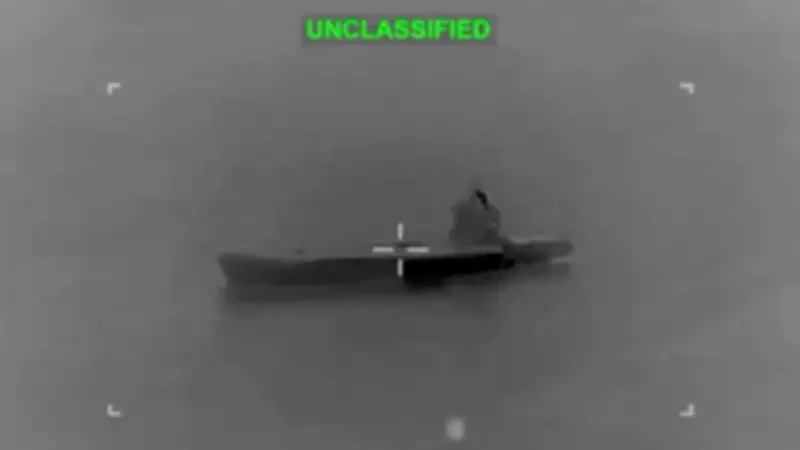
US Central Command Shares Video of Strike on Iranian Drone Carrier as Conflict Intensifies
In a significant escalation of hostilities in the Middle East, the US Central Command has publicly released a video showing a military strike on an Iranian drone carrier. The footage, shared on Friday, depicts the vessel engulfed in flames following the attack, underscoring the ongoing and volatile nature of the regional war.
Details of the Strike and Military Statements
Captioning the post, US Central Command stated, "US forces aren't holding back on the mission to sink the entire Iranian Navy." The command described the targeted drone carrier as roughly the size of a World War II aircraft carrier, emphasizing its substantial scale and strategic importance. Admiral Brad Cooper, commander of US Central Command, provided further context during a press conference on Thursday, confirming that the vessel was on fire at the time of his remarks.
Admiral Cooper detailed that US military strikes against the Iranian navy have intensified significantly. According to his report, more than 30 Iranian warships have been sunk or destroyed in recent operations. He noted a marked decline in Iranian offensive capabilities, with ballistic missile attacks decreasing by 90 percent and drone strikes dropping by 83 percent since the conflict began. "Having said this, we remain vigilant," Cooper cautioned, highlighting ongoing concerns despite these reductions.

Escalation of US Firepower and Regional Implications
Standing alongside Admiral Cooper, US Defence Secretary Pete Hegseth announced that the level of US firepower over Iran is expected to "surge dramatically" in the coming days. This statement signals a potential increase in military operations as tensions continue to mount. The conflict has seen the United States and Israel conducting strikes inside Iran, while Iran has retaliated by targeting US interests in the region and Israel with swarms of drones and ballistic missiles.
The release of the strike video serves as a public demonstration of US military resolve and capability in the region. It follows a series of joint US and Israeli attacks that have previously resulted in the death of Iran's Supreme Leader Ayatollah Ali Khamenei, further fueling the cycle of retaliation and violence.
Analysis of the Conflict's Trajectory
The ongoing war in the Middle East has evolved into a complex regional confrontation, with multiple actors involved and significant geopolitical stakes. Key points to consider include:
- The strategic targeting of Iranian naval assets, such as drone carriers, aims to degrade Iran's ability to project power and conduct asymmetric warfare.
- The reported decrease in Iranian attacks may indicate successful US and Israeli defensive measures or tactical shifts by Iran.
- The potential surge in US firepower, as mentioned by Defence Secretary Hegseth, could lead to further escalations and humanitarian concerns.
As the situation develops, international observers are closely monitoring the conflict for signs of de-escalation or further military engagements. The public sharing of combat footage by US Central Command adds a new dimension to the information warfare aspect of this conflict, potentially influencing public perception and diplomatic efforts.