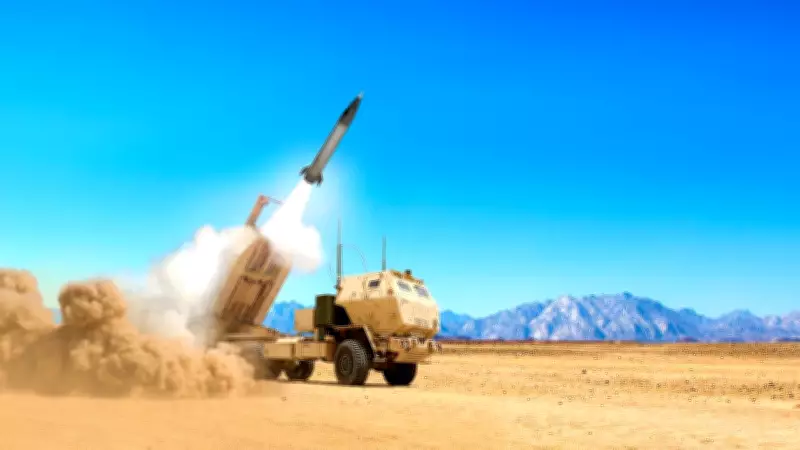
US Deploys New PrSM Missile in Opening Strikes Against Iran
The United States military initiated its long-anticipated campaign against Iran, dubbed Operation Epic Fury under President Donald Trump, with a significant technological debut. On February 28, 2026, the opening salvo included the first combat use of the newly developed Precision Strike Missile, known as PrSM and pronounced "prism." This marked a pivotal moment in modern warfare, introducing an untested weapon into a high-stakes conflict.
Civilian Casualties and Target Controversy Emerge
According to a detailed report by The New York Times, the initial day of operations saw US ballistic missiles strike a sports hall and an adjacent elementary school near a military facility in Lamerd, southern Iran. The attack resulted in at least 21 fatalities. In a separate incident in Minrab, Tomahawk cruise missiles hit another school, claiming 175 lives. The Lamerd assault, however, drew particular attention due to the involvement of the PrSM, a weapon previously absent from the US military's traditional arsenal and never before tested in live combat scenarios.
The New York Times verified multiple videos capturing the dual strikes in Lamerd and their aftermath. Analysis by reporters and munitions experts confirmed that the weapon's characteristics, explosion patterns, and resultant damage aligned with the PrSM, a short-range ballistic missile. This verification underscores the weapon's operational debut and the uncertainties it brings to the conflict.

High Cost and Limited Procurement of the PrSM System
The financial implications of this new weapon are substantial. Each PrSM unit is estimated to cost between $1.6 million and over $3.5 million, depending on production scale. In its fiscal 2026 budget request, the US Army sought funding to procure just 45 of these missiles, highlighting both the expense and the selective deployment strategy. This limited procurement raises questions about resource allocation in ongoing military operations.
Design Features and Impact Analysis Under Scrutiny
The PrSM is engineered to detonate just above its target, dispersing small tungsten pellets over a wide area. Video evidence from a residential neighborhood approximately 900 feet from the sports hall shows the missile in flight, with its distinctive silhouette matching the PrSM before erupting into a large midair fireball. Another clip from a security camera directly across from the sports hall captures the moment of impact, showing an explosion occurring just above the structure, though the incoming missile itself is not visible.
Post-strike images reveal both sites riddled with small holes, likely caused by the tungsten pellets released upon detonation. Notably, an Islamic Revolutionary Guards Corps (IRGC) compound is located directly next to the sports hall, but it remains unclear whether it was struck. Archival satellite imagery indicates that the facilities have been separated by walls for at least 15 years, complicating the narrative of the strike's intent.
Operational Debut and Targeting Uncertainties
The PrSM completed prototype testing only last year, according to an army release, making it a relatively new addition to the US arsenal. On March 1, US Central Command shared footage of a PrSM launch from the opening 24 hours of the conflict, and days later, its commander, Admiral Brad Cooper, confirmed the missile's first combat use. Given the weapon's novelty, it is difficult to determine whether the Lamerd strikes were intentional, resulted from a technical flaw, or were due to errors in target selection.
There is no clear evidence linking the school or sports hall to the nearby IRGC compound. At the time of the strike, the sports hall was reportedly being used by a women's volleyball team, as stated by Iran's UN envoy Amir Saeid Iravani. Social media posts associated with the school indicate it was regularly used by children, and the sports hall has long been identified as a civilian facility on publicly available mapping platforms.

Visuals from the aftermath show the sports hall with scorch marks and a partially collapsed roof, while footage from inside the school reveals shattered windows, fire damage, and visible bloodstains. The PrSM is designed to target enemy troops and unarmored vehicles, with a range more than double that of other missiles in the US Army's arsenal, emphasizing both its extended reach and destructive capability.
Broader Implications for Military Strategy and Ethics
The use of the PrSM in these strikes highlights a new and uncertain phase in the conflict, raising critical questions about military ethics, targeting precision, and the integration of untested technologies in warfare. As the US and its close ally Israel coordinate a sweeping offensive across Iran, the deployment of such advanced weaponry underscores the evolving nature of global military engagements and the high stakes involved in modern combat operations.