

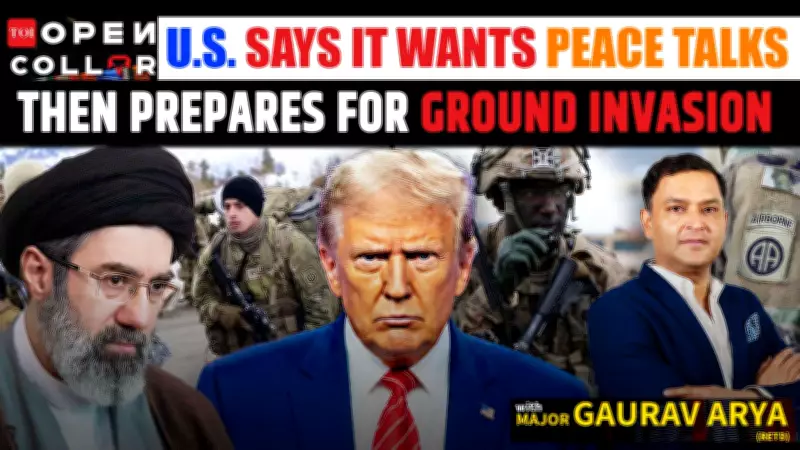
U.S. Military Buildup in Middle East Sparks War Fears
In a striking development, the United States is simultaneously advocating for peace negotiations while significantly bolstering its military presence near Iran. This dual approach has ignited intense speculation about Washington's true strategic objectives in the volatile Middle East region.
Substantial Troop Deployment Raises Alarm
American military forces have been mobilized on a considerable scale, with approximately 7,000 troops now positioned in strategic locations. This deployment includes elite units such as the 82nd Airborne Division and specialized Marine Expeditionary Units. Furthermore, the U.S. Navy has dispatched powerful amphibious assault groups, notably the USS Tripoli and USS Boxer, to regional waters.
This substantial military reinforcement occurs against a backdrop of ongoing diplomatic communications between the two nations. The simultaneous pursuit of dialogue and military preparedness presents a complex and potentially contradictory foreign policy stance that analysts are struggling to interpret.

Strategic Implications and Regional Reactions
The positioning of these forces has generated serious concerns among international observers and regional powers. Key questions being raised include:
- Is this military buildup primarily intended as a deterrent against Iranian aggression?
- Could these preparations signal an imminent escalation toward direct conflict?
- How does this align with stated American diplomatic objectives in the region?
The situation remains fluid and highly unpredictable, with both nations maintaining publicly stated positions while preparing for multiple potential outcomes. The presence of advanced American military assets so close to Iranian territory represents a significant escalation in regional tensions that could have far-reaching consequences.
Historical Context and Current Dynamics
This crisis unfolds within a long history of strained relations between the United States and Iran, marked by periods of intense confrontation and limited cooperation. The current military deployments represent one of the most substantial American force concentrations in the region in recent years, suggesting Washington is preparing for scenarios ranging from diplomatic resolution to full-scale military engagement.
Regional stability hangs in the balance as other Middle Eastern nations monitor these developments closely. The strategic Strait of Hormuz, a critical global oil transit route, remains a potential flashpoint that could draw multiple nations into any conflict that might emerge from these heightened tensions.






