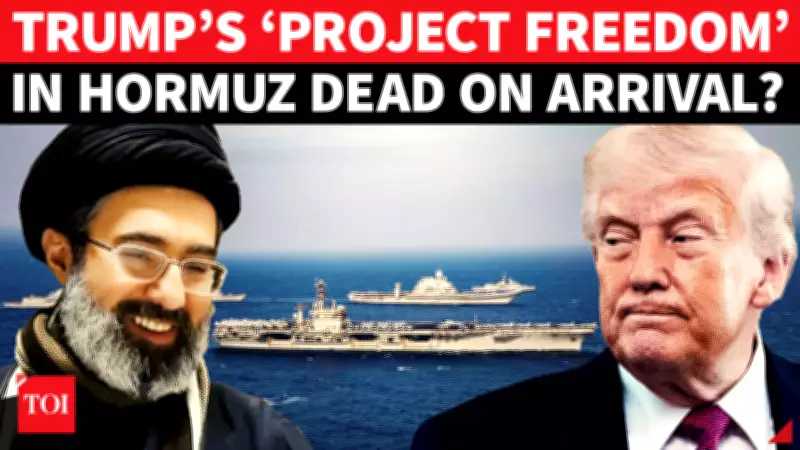
The United States' Hormuz 'Freedom Operation' is taking a more cautious turn than initially expected. Despite strong rhetoric from political leaders, US Navy warships may not directly escort commercial vessels through the strategic Strait of Hormuz. Instead, officials indicate a strategy focused on proximity deterrence, keeping naval assets close enough to respond swiftly if tensions escalate.
Shift in Strategy
Reports from Axios suggest that the mission will rely on intelligence-sharing, safer navigation routes, and rapid-response capabilities rather than visible convoy leadership. While the deployment remains significant, including warships, aircraft, and thousands of personnel, the shift hints at a calibrated approach to avoid direct confrontation.
Iran's Warning
Meanwhile, Iran has warned that any U.S. presence in the strategic waterway could provoke serious consequences. The Islamic Revolutionary Guard Corps (IRGC) has deployed small attack vessels and even threatened the use of unconventional tactics, including 'dolphin bombs' and a 'mosquito fleet' to target US military assets.

The situation remains fluid, with both sides signaling readiness but also seeking to avoid an all-out conflict. The US Navy's adjusted posture reflects a desire to maintain freedom of navigation while minimizing the risk of escalation in one of the world's most critical energy chokepoints.