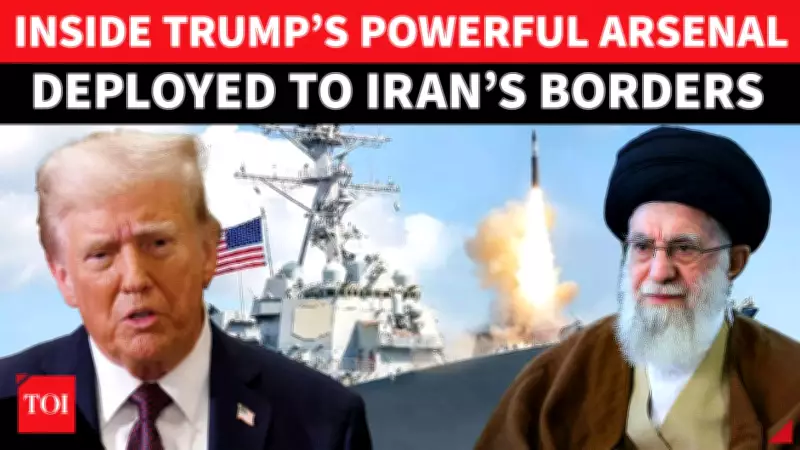
Trump's Military Buildup in Middle East: Warships, Warplanes, Missiles Deployed Amid Iran Tensions
The United States has dramatically increased its military footprint across the volatile Middle East region as President Donald Trump weighs the possibility of a strike against Iran. This escalation comes amid stalled negotiations concerning Iran's nuclear and missile programs, creating a tense geopolitical atmosphere.
Surveillance and Strategic Deployments Intensify
Open-source flight tracking data and satellite imagery reveal a pattern of near-constant surveillance operations over the region. Heavy cargo aircraft movements indicate substantial logistical support, while advanced air and naval assets have been strategically positioned. The military buildup appears designed to project power and readiness as diplomatic channels remain fraught.
Carrier Strike Group Arrives in Arabian Sea
A centerpiece of this deployment is the arrival of the USS Abraham Lincoln carrier strike group in the northern Arabian Sea. This formidable naval force is accompanied by:

- Multiple guided-missile destroyers providing layered defense
- Stealth fighter aircraft capable of penetrating sophisticated air defenses
- Specialized electronic warfare jets for disrupting enemy communications
- Advanced missile defense systems to counter potential threats
Additional Military Assets Flood the Region
Beyond the carrier group, the United States has surged additional military resources into the Middle East theater. These reinforcements include:
- Additional warships to bolster naval presence
- Unmanned aerial vehicles for persistent surveillance
- Aerial refueling tankers to extend combat aircraft range
- Enhanced air defense systems to protect allied assets
This comprehensive military posture represents one of the most significant American force concentrations in the region in recent years.
Official Statements and Strategic Messaging
United States officials have characterized this buildup as a demonstration of readiness and resolve. President Trump has reportedly warned Tehran through diplomatic channels that any refusal to compromise on nuclear and missile issues could trigger what administration officials describe as "a far more devastating response" than previously contemplated.
The military deployments serve both practical and symbolic purposes. Practically, they position American forces for potential rapid response. Symbolically, they communicate Washington's seriousness about addressing what it perceives as Iranian provocations and intransigence in negotiations.
As tensions simmer, the international community watches closely how this military posture might influence diplomatic efforts or potentially escalate into broader conflict. The coming weeks will likely prove crucial in determining whether this show of force leads to renewed negotiations or further military escalation in one of the world's most strategically important regions.