

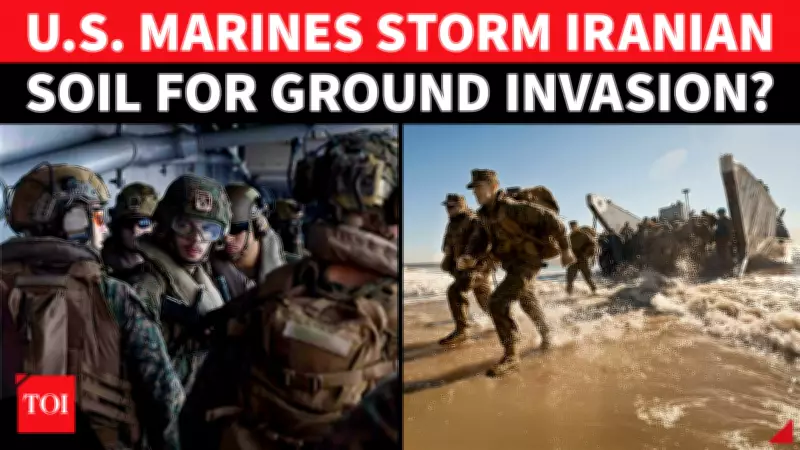
US Marines and Iranian IRGC Forces Mobilize Amid Escalating Middle East Tensions
Military tensions between the United States and Iran have escalated to a critical juncture, with recent reports indicating that thousands of elite soldiers from both nations are now positioned in the Middle East. According to sources, this significant mobilization signals a potential shift from strategic planning to active ground operations, raising alarms about the stability of the region.
Strategic Deployments and Potential Flashpoints
RT News has reported that a substantial number of US troops and Marines are believed to be deployed across key areas in the Middle East. While official statements suggest that any military mission would likely be targeted and precise rather than a full-scale invasion, the growing presence of forces underscores the seriousness of the situation.
Strategic locations such as Kharg Island and the Strait of Hormuz have emerged as critical flashpoints. These areas are vital for global oil shipping routes and regional security, making them focal points in the ongoing standoff. The concentration of military assets in these zones highlights their importance in any potential conflict scenario.

Military Buildup and Advanced Assets
The military deployments continue to expand, with both sides enhancing their capabilities. The United States has reportedly positioned advanced naval assets and amphibious forces in the region, bolstering its operational readiness. Similarly, Iran's Islamic Revolutionary Guard Corps (IRGC) has mobilized thousands of elite soldiers, indicating a robust response to the US presence.
This buildup includes not only ground troops but also sophisticated weaponry and support systems, suggesting that both nations are preparing for a range of contingencies. The integration of these assets points to a comprehensive military strategy aimed at securing strategic advantages.
Context of Rising Tensions
The current mobilization occurs against a backdrop of heightened tensions, with recent incidents such as missile strikes and drone attacks exacerbating the situation. Reports of Iran targeting US aircraft and engaging in conflicts with neighboring countries have further strained relations, contributing to the volatile environment.
Political rhetoric from both sides has also intensified, with leaders making bold statements that could influence military decisions. The involvement of proxy groups and regional allies adds another layer of complexity, potentially widening the scope of any confrontation.
As the situation develops, the international community is closely monitoring these movements, concerned about the implications for global peace and security. The potential for miscalculation or escalation remains high, underscoring the need for diplomatic efforts to de-escalate tensions.
In summary, the mobilization of US Marines and Iranian IRGC forces represents a significant escalation in Middle East tensions. With strategic locations at risk and military assets on high alert, the region faces a precarious moment that could shape its future trajectory.






