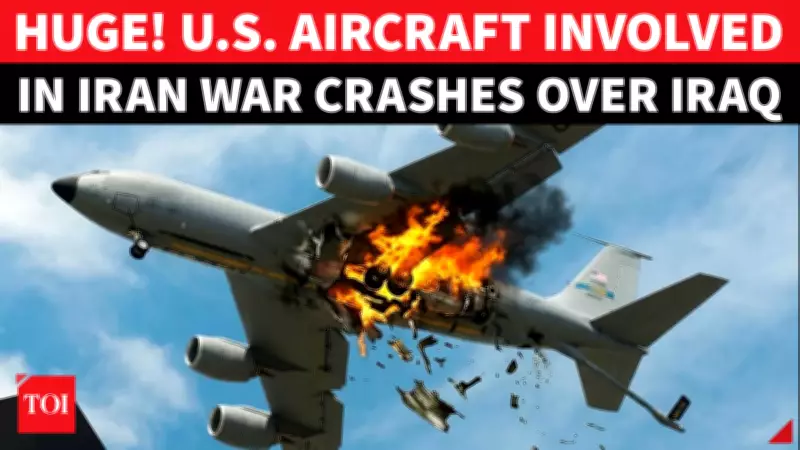
US Air Force Refueling Aircraft Crashes in Western Iraq During Ongoing Mission
A significant development has occurred in the escalating Middle East conflict as a United States Air Force Boeing KC-135 Stratotanker refueling aircraft crashed in western Iraq. The incident represents a major operational setback for American military forces engaged in the region.
Details of the Crash and Missing Crew
According to United States Central Command (CENTCOM), the crash took place during Operation Epic Fury, which involved two aircraft. While one aircraft managed to land safely, the KC-135 Stratotanker went down in what officials describe as friendly airspace. All five crew members aboard the refueling plane are currently missing, and extensive rescue operations are underway at the crash site.
Military officials have confirmed that the crash was not caused by hostile fire or friendly fire, indicating a potential mechanical failure or operational accident. The investigation into the exact cause is ongoing as recovery teams work to locate the missing personnel.

Context of Regional Military Escalation
This aircraft loss occurs against the backdrop of heightened military tensions between the United States, Israel, and Iran. The conflict intensified following strikes that resulted in the death of Iranian Supreme Leader Ali Khamenei, triggering a widening regional confrontation.
The United States has been expanding its military campaign in coordination with Israel against Iranian forces and proxies throughout the Middle East. The KC-135 Stratotanker plays a crucial role in such operations by providing aerial refueling capabilities that extend the range and endurance of combat aircraft.
Operational Impact and Response
The loss of this strategic refueling asset could potentially affect ongoing military operations in the region. The KC-135 is a workhorse of the US Air Force's tanker fleet, essential for sustaining air campaigns over extended distances.
Rescue and recovery efforts are currently the priority for US forces in Iraq. The incident highlights the inherent risks of military aviation operations even in non-combat situations, particularly during periods of heightened regional tension.
As the situation develops, military analysts will be watching closely to see how this incident affects US operational capabilities in the Middle East and whether it influences the broader strategic calculus in the ongoing conflict with Iran.