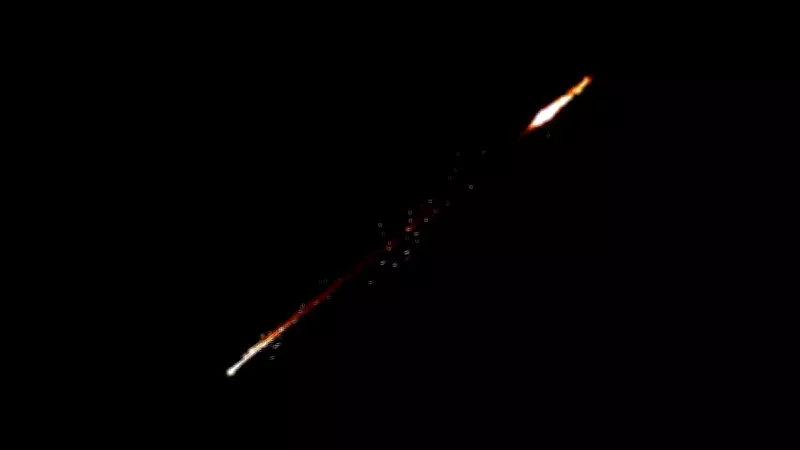
US and Israeli Forces Encounter Major Hurdle in Iran Missile Campaign
The joint military operation launched by the United States and Israel against Iran on Saturday has encountered a formidable obstacle: the comprehensive elimination of Iran's ballistic missile capabilities. Experts and analysts are highlighting the extreme difficulty involved in locating and destroying the entire arsenal of ballistic missiles, along with the sophisticated production sites that support them.
A Complex and Dispersed Arsenal
Iran's ballistic missile program is known for its depth and dispersion across the country. The challenge is not merely about striking known facilities but involves a multi-layered network that includes hidden launch sites, underground storage depots, and mobile launchers that can be moved quickly to evade detection. This makes a complete neutralization operation exceptionally complex for even the advanced militaries of the US and Israel.
Intelligence assessments suggest that Iran has invested heavily in hardening and concealing its missile infrastructure over the years. Many production facilities are believed to be located deep underground or within mountainous regions, providing natural protection against aerial bombardment. Furthermore, the country has developed a significant inventory of missiles with varying ranges, some capable of reaching targets across the Middle East and beyond.

Strategic and Operational Implications
The difficulty in eliminating these missiles carries profound strategic implications for the ongoing conflict. If a substantial portion of Iran's missile force remains operational, it could pose a continuous threat to regional stability and to the forces involved in the operation. Military planners are now forced to consider extended campaigns and resource-intensive strategies to address this persistent danger.
Key aspects of the challenge include:
- Detection Limitations: Advanced surveillance and reconnaissance systems may struggle to identify all hidden or mobile missile units in real-time.
- Production Resilience: Destroying known sites may only temporarily disrupt production, as Iran could have redundant or backup facilities.
- Logistical Complexity: Coordinating strikes across a vast geographic area while minimizing collateral damage adds to the operational burden.
International Context and Reporting
This development was initially reported by the International New York Times, with the article published and last updated on March 3, 2026, at 05:41 IST. The report underscores the broader geopolitical tensions in West Asia, where ballistic missiles have become a central element of military strategy and deterrence. The ongoing conflict highlights the intricate balance of power in the Middle East and the technological arms race that defines modern warfare in the region.
As the situation evolves, the ability of the US and Israeli militaries to effectively counter Iran's missile threat will be closely watched by global observers. The outcome could influence not only the immediate conflict but also future military doctrines and non-proliferation efforts worldwide.