

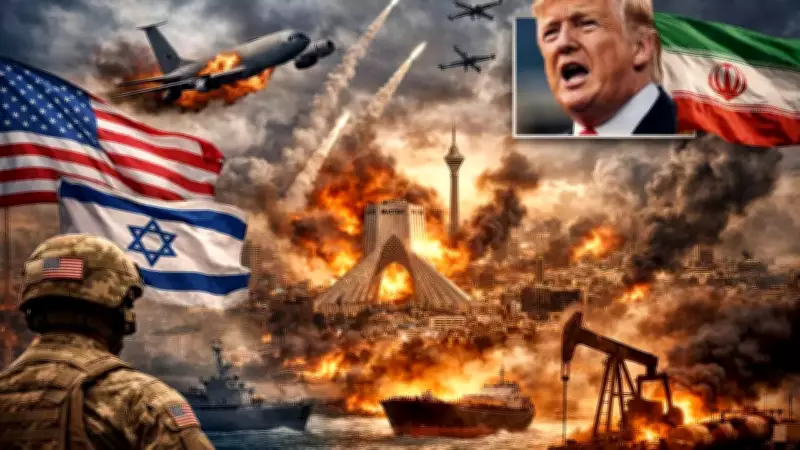
US-Israel-Iran Conflict Escalates: Third Week Looms Amidst Regional Turmoil
The war involving the United States, Israel, and Iran is poised to enter its third week, with no indications of de-escalation as missile strikes, drone attacks, and air raids persist across the Middle East. This ongoing conflict has intensified, drawing in regional powers and causing significant disruptions to global markets and energy supplies.
Initial Attacks and Retaliation
The conflict began on February 28 with coordinated US and Israeli strikes under 'Operation Epic Fury,' targeting Iranian military infrastructure and missile systems. This initial assault resulted in the death of Iran's Supreme Leader Ali Khamenei and several senior commanders, prompting immediate retaliation from Tehran. Iranian forces launched missiles and drones toward Israel and US military facilities, marking the start of a rapidly escalating war.
Expansion of the Conflict
In the following days, the conflict widened significantly. Iran responded with large-scale ballistic missile and drone attacks on Israeli cities and military sites, while US forces expanded their air campaign against Iranian targets. The Lebanese militant group Hezbollah joined the fray, firing rockets into northern Israel, leading to Israeli airstrikes on Hezbollah positions in Lebanon, including deadly attacks in Nabi Chit that killed at least 16 people.

Regional Involvement and Global Impact
Gulf states such as Kuwait, Bahrain, Qatar, and the United Arab Emirates became targets, with attacks near the Strait of Hormuz disrupting maritime traffic and raising fears of a global energy crisis. Oil prices surged above $100 per barrel as traders worried about supply disruptions. The conflict has also led to significant casualties, with over 1,300 reported deaths in Iran alone, and hundreds more in Lebanon and other countries.
Recent Developments and Leadership Changes
As the war progressed, Iran appointed Mojtaba Khamenei as the new Supreme Leader, who vowed to continue the fight. US President Donald Trump claimed Iran is "about to surrender" and ruled out negotiations, despite ongoing hostilities. The US and Israel intensified their strikes, with Israeli authorities claiming to have destroyed 80% of Iran's air-defence systems. A major aviation incident occurred when a US Boeing KC-135 Stratotanker crashed in Iraq, killing four crew members.
Humanitarian and Economic Consequences
The United Nations estimates that hundreds of thousands of people have been displaced, particularly in Lebanon, with children among the worst affected. Humanitarian agencies warn of thousands injured or killed. The International Energy Agency released 400 million barrels from emergency reserves to stabilise markets as tanker traffic through the Strait of Hormuz nearly halted. Global leaders are holding emergency talks to prevent a broader economic shock.
Key Points:

- Missile and drone attacks continue across the Middle East with no signs of de-escalation.
- Oil prices have surged, and shipping through the Strait of Hormuz is disrupted.
- Casualties are mounting, with over 1,300 reported deaths in Iran and significant displacement.
- Regional powers like Hezbollah and Gulf states are increasingly involved in the conflict.
- Global markets are reacting to the instability, prompting emergency measures.





