US-Israel Launch Coordinated Strikes on Iran, Triggering Regional Conflict
The long-simmering tensions in West Asia erupted violently on Saturday morning as multiple explosions thundered across Tehran. In a coordinated daylight offensive, the United States and Israel launched simultaneous strikes on the Iranian capital, marking a significant escalation in regional hostilities.
Operation Epic Fury and Operation Lion's Roar
The offensive, aimed at deterring the Ayatollah Ali Khamenei-led regime from advancing its nuclear ambitions, saw Washington naming its military campaign "Operation Epic Fury" while Israel called its offensive "Operation Lion's Roar." Thick plumes of smoke rose over Tehran after the first wave of strikes, hanging over parts of the capital as sirens wailed and emergency vehicles raced through the streets.
Iran's Immediate Retaliation
Hours after the strikes, Iran's paramilitary Islamic Revolutionary Guard Corps launched what it called a "first wave" of drones and missiles targeting Israel. The force had previously vowed retaliation if attacked, warning that American military personnel and bases across the region could also become targets.

Explosions were heard across Israel as air defense systems worked frantically to intercept incoming Iranian missiles. There was no immediate word on damage or casualties from the unfolding attack, but the situation remained fluid and dangerous.
Iron Dome: Israel's Multi-Layered Defense Shield
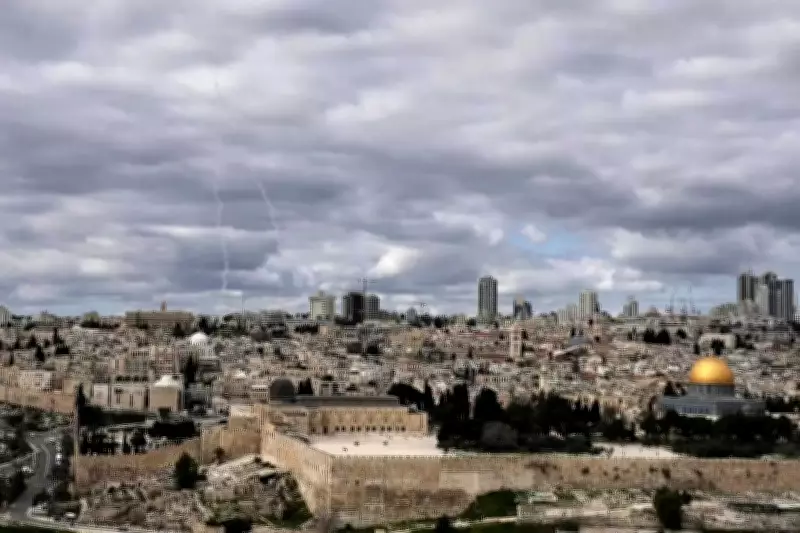
As Iranian missiles streaked toward Israeli cities, much of the country's defense relied on its sophisticated multi-layered air shield, prominently featuring the widely known Iron Dome system. This mobile defense system is specifically designed to detect, track, and intercept incoming rockets and drones in real time.
Interceptions flashed across the night sky as air defense batteries engaged targets mid-air, preventing many projectiles from reaching populated areas. The system operates through a network of batteries equipped with radar systems that detect incoming short-range rockets and calculate interception paths.
How Iron Dome Works
Iron Dome operates through a precise three-step process:
- The system's radar detects an incoming rocket within range
- Data about speed and trajectory is transmitted to the command-and-control center
- The control unit calculates the likely impact point and determines whether to engage
If the rocket threatens a populated area, an interceptor missile is launched to destroy it mid-air. If it's projected to land in an open field or at sea, the system conserves its costly interceptor missiles by not engaging.
Technical Specifications and Development
According to the US Congressional Research Service, Iron Dome is capable of intercepting projectiles fired from distances ranging between 2.5 and 43 miles (approximately 4 to 70 kilometers). Each battery typically includes:
- Three or four launchers
- Up to 20 interceptor missiles per launcher
- A radar unit
As of 2021, Israel reportedly had at least 10 Iron Dome batteries deployed nationwide, each designed to protect roughly 60 square miles of populated territory.
Cost and International Support
Each interceptor missile is estimated to cost between $40,000 and $50,000, according to the Institute for National Security Studies. The United States has provided significant financial backing for the system, contributing to both development and replenishing interceptor stocks during major conflicts.
Former US President Joe Biden had previously stated he would seek $14.3 billion in military aid for Israel, emphasizing: "We're surging additional military assistance, including ammunition and interceptors to replenish Iron Dome."
Regional Security Measures Activated
Several hospitals in Israel activated emergency protocols, shifting patients and critical procedures to underground facilities as a precautionary measure. US embassies and consulates in Qatar, United Arab Emirates, and Israel advised staff to shelter in place, urging American citizens to "do the same until further notice."

In Iran, security forces mounted heavy deployments across Tehran, particularly around sensitive areas including the Pasteur district, home to Khamenei's residence.
Political Context and Statements
The attacks followed growing frustration from US President Donald Trump regarding Iran's position in negotiations over its nuclear and missile programs. Trump stated Washington's goal was "eliminating imminent threats" from Iran, while Israel's Prime Minister Benjamin Netanyahu described the operation as necessary to remove an "existential threat."
Trump declared: "We are going to destroy their missiles and raze their missile industry to the ground. It will be totally, again, obliterated. We're going to annihilate their navy."
The coordinated strikes represent a dramatic escalation in the long-standing tensions between Iran and the US-Israel alliance, with both sides now engaged in active military conflict that threatens to destabilize the entire West Asia region.