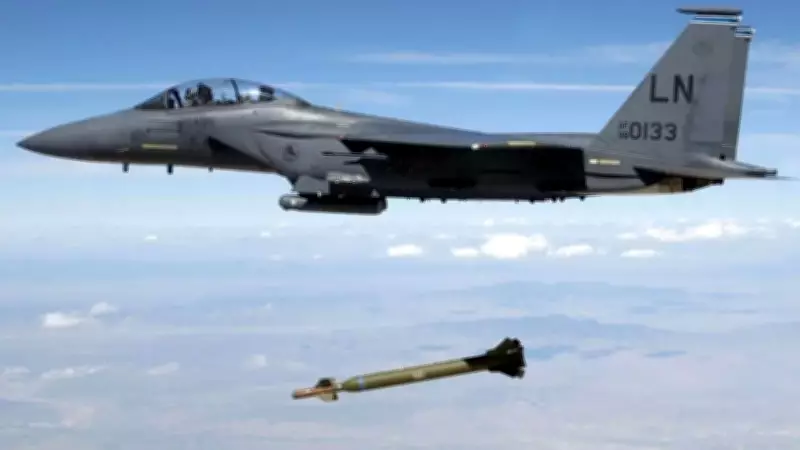
US Drops 900kg Bunker Buster Bomb on Isfahan, Targeting Iran's Underground Defenses
The ancient city of Isfahan in Iran experienced a dramatic nighttime airstrike, with reports confirming that a 2,000-pound (900 kg) bunker buster bomb struck an ammunition dump near the area. This attack highlights the escalating use of specialized munitions designed to penetrate and destroy fortified underground structures, as Iranian forces have developed an elaborate subterranean tunnel network to protect critical military assets.
The Strategic Use of Bunker Buster Bombs in Modern Conflicts
In the current conflict, bunker buster bombs have become a key tool for the American-Israeli coalition, aimed at dismantling Iran's extensive underground defenses. These structures, including command centers and weapon storage facilities, are built deep below the surface to evade aerial detection and withstand conventional bombing. The advantage for defenders lies in the removal from observation and protection from regular explosives, a tactic historically used since World War I with trench systems.
During the inter-war period and World War II, underground bunkers like the French Maginot Line and Berlin's complex were constructed specifically to counter air and artillery threats. Today, similar networks in Iran have prompted a reliance on advanced bunker buster technology. For instance, Israel has employed these bombs in Gaza and Lebanon, leveraging intelligence to guide precision strikes on tunnel networks.

Technological Advancements in Bunker Buster Munitions
Bunker buster bombs, such as the GBU-57 Massive Ordnance Penetrator (MOP), are engineered with thick metal casings to penetrate reinforced concrete. Unlike standard bombs, their fuses are positioned centrally or at the rear to delay detonation until after impact, allowing them to burrow deep before exploding. This design was demonstrated in June of last year when US B-2 stealth bombers targeted Iran's Fardow and Natanz nuclear facilities, which were carved into mountains for perceived protection.
These specialized weapons are now standard in many air forces globally, as critical infrastructure and military hubs are increasingly shielded by hardened shelters. The mechanism involves a timed fuse that activates post-penetration, maximizing damage to underground targets while minimizing collateral effects on the surface.
Historical Context and Global Implications
The practice of using underground defenses dates back to early 20th-century warfare, but modern conflicts have seen a surge in their sophistication. Iran's tunnel networks are part of a broader strategy to safeguard war-waging capabilities, making bunker busters essential for offensive operations. The recent strike on Isfahan underscores the ongoing arms race in military technology, where air forces adapt to counter subterranean threats.
As nations continue to invest in buried command centers and equipment storage, the development and deployment of bunker buster bombs are likely to expand, shaping future battlefield dynamics. This incident in Isfahan serves as a stark reminder of the evolving nature of aerial warfare and the critical role of intelligence in targeting hidden infrastructures.