

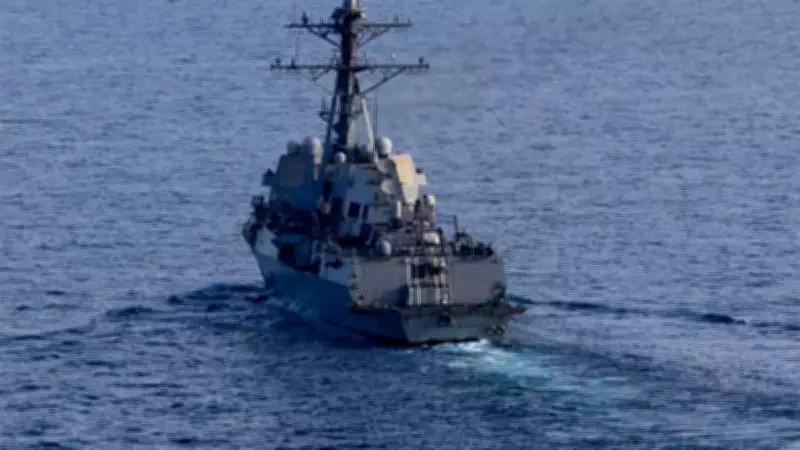
The US military has stopped another merchant vessel attempting to breach the American blockade of Iranian ports, a US official with knowledge of the situation told The Associated Press on Saturday. The Gambia-flagged bulk carrier Lian Star ignored multiple warnings from US forces overnight as it tried to enter an Iranian port, according to the official, who spoke on condition of anonymity. The ship was disabled by US aircraft in the Gulf of Oman and remains adrift there. US forces have not boarded it, the official confirmed.
Background of the Blockade
The US launched the blockade on April 17 in response to Iran effectively closing the Strait of Hormuz. The United States warned on Saturday that it is "more than capable" of resuming war with Iran after President Donald Trump stated that any peace deal must adhere to his red lines, including Tehran never being able to develop nuclear weapons. The White House had signaled that Trump was close to a decision on a potential deal, though Tehran denied there was a final agreement on ending the conflict. US sources told AFP that the deal was awaiting Trump's sign-off, but he made no decision after a White House Situation Room meeting on Friday. Pentagon chief Pete Hegseth, while attending a defense summit in Singapore, said on Saturday that Washington is "more than capable" of restarting the war.
US Bans Iranian Buyers of Military Technology
The US announced Friday that it is "dismantling a sophisticated Iranian network" used to obtain sensitive military technology. The network "impersonated and defrauded" dozens of American technology companies out of millions of dollars to "acquire advanced equipment — including spectrum analyzers and security detection devices — for Iran's defense sector," the US State Department said in a statement. It did not name the technology companies that were lured into doing business through fake websites that "mimicked real American companies, using intermediaries in Dubai to receive shipments, and then smuggling the technology into Iran in violation of US sanctions." The network was led by Iran-based Ali Majd Sepehr, the State Department spokesman said.

Qatar's Stance on Hormuz Fees
Qatar opposes permanent legal fees for transit through the Strait of Hormuz, but a temporary fee is negotiable and could help restore normal passage through the key waterway, a top official said. A permanent fee would impact consumers, and Qatar objects to any such move, Deputy Prime Minister Sheikh Saoud bin Abdulrahman Al Thani said at a defense conference in Singapore. A short-term fee for mine clearing or similar purposes can be considered, he added. The comments were in response to a question about talks between Iran and Oman to impose a permanent toll system to formalize control of traffic through Hormuz, one of the world's key trade routes. Iran has effectively closed the waterway in response to US-Israeli airstrikes that began in late February.






