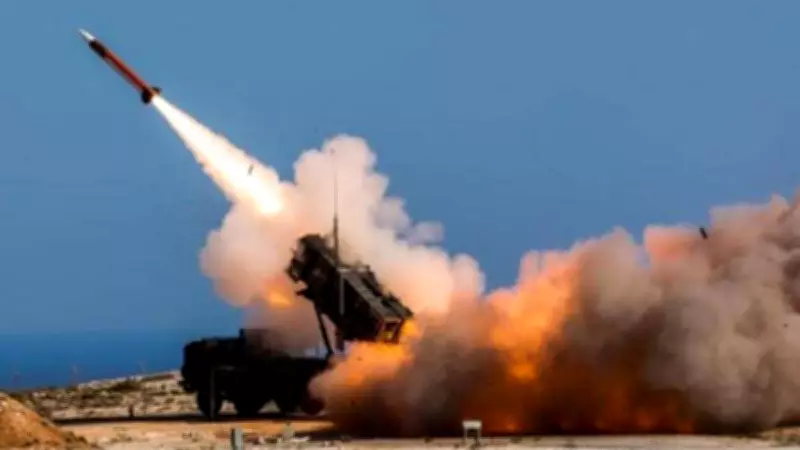
The United States has approved a massive $8.6 billion military sales package to Israel and several Middle East allies, as tensions with Iran continue to escalate. The announcement comes amid growing uncertainty over the possibility of a full-scale war in the region.
Details of the Military Sales Package
The approved sales include advanced weapons systems, missile defense technology, and support equipment. Key components of the package are designed to bolster the defensive capabilities of Israel and partner nations against potential threats from Iran and its proxies. The US State Department confirmed the deal, stating it would enhance the security of allies while maintaining stability in the region.
Strategic Implications
This military sales package is seen as a strategic move by Washington to reassure its allies amid rising fears of an Iranian attack. Recent intelligence reports have indicated increased military activity by Iran, prompting concerns among US and Israeli officials. The deal includes precision-guided munitions, air defense systems, and advanced radar technology.

Israel's Defense Minister welcomed the approval, calling it a testament to the strong bilateral ties between the two nations. He emphasized that the weapons would be used solely for defensive purposes. Meanwhile, critics have raised concerns about the potential for escalating the conflict, urging diplomatic solutions instead.
Regional Reactions
The announcement has drawn mixed reactions across the Middle East. Saudi Arabia and the United Arab Emirates have expressed support for the deal, viewing it as a deterrent against Iranian aggression. However, Iran has condemned the sales, warning that such actions could destabilize the region further. Hezbollah and other Iranian-backed groups have threatened retaliation.
Analysts suggest that the approval of this package signals a shift in US policy towards a more assertive stance against Iran. The Biden administration has been under pressure from allies to take a tougher line, especially after recent attacks on oil tankers and infrastructure in the Gulf.
Impact on US-Israel Relations
The military sales reinforce the already strong US-Israel alliance, which has been a cornerstone of American foreign policy in the Middle East. The deal includes provisions for technology transfer and joint training exercises, further deepening military cooperation.
In addition to Israel, the package includes sales to Jordan, Egypt, and other regional partners. This comprehensive approach aims to create a unified front against common threats. The US has also pledged to provide intelligence support and logistical assistance to ensure the effective deployment of these systems.
Economic and Political Considerations
The $8.6 billion deal is expected to boost the US defense industry, creating jobs and generating revenue for American manufacturers. However, it also comes at a time of domestic debate over military spending, with some lawmakers questioning the necessity of such large-scale sales.
Proponents argue that the sales are essential for maintaining peace through strength, while opponents warn of an arms race in the region. The approval process included rigorous reviews to ensure compliance with international law and human rights standards.
Looking Ahead
As uncertainty over a potential Iran war looms, the US military sales package represents a significant commitment to its allies. The coming weeks will be critical in determining whether diplomatic efforts can de-escalate tensions or if the region is heading towards conflict.
The international community is closely watching the situation, with the United Nations calling for restraint. Meanwhile, Israel and its neighbors are preparing for various scenarios, including potential missile attacks and ground incursions. The military sales approved today are a clear signal of US support for its partners in the face of these challenges.