In a powerful call to action, former Canadian Deputy Prime Minister Chrystia Freeland has asserted that Ukraine possesses the capacity to defeat Russia, and the geopolitical West must urgently shift from planning for stalemate to devising a concrete strategy for Ukrainian victory. Writing in early January 2026, Freeland contends that continued half-hearted support undermines not only Ukraine but the security of NATO and Asian allies.
The Legacy of Western Hesitation and Defeatism
Freeland traces a pattern of Western equivocation back to Russia's 2014 invasion of Crimea, which was met with calls for Ukraine to stand down. This mindset persisted on the eve of the full-scale invasion in 2022, with plans focused on supporting a prolonged guerrilla war and reluctance to provide advanced weapons for fear they would be captured. Even after Ukraine's stunning initial resistance, Western allies have been hesitant to supply the full range of tools needed for victory and have sometimes cautioned against their most effective use.
The real question, Freeland posits, is not whether Ukraine can win, but whether the world truly wants it to. She argues that a paradigm shift is essential: recognizing that a Ukrainian victory is squarely in the interest of the West. Failure to act on this belief, she warns, is effectively opting for a world where Russian President Vladimir Putin succeeds.

Ukraine's Proven Capacity for Innovation and Resistance
Despite being a nation of 40 million with an economy comparable to Nebraska, Ukraine has held its own against Russia's vast resources and military. Freeland highlights key achievements: preventing the fall of Kyiv, degrading the Russian Black Sea Fleet without a navy, contesting control of the skies, and maintaining a defensive stalemate on land.
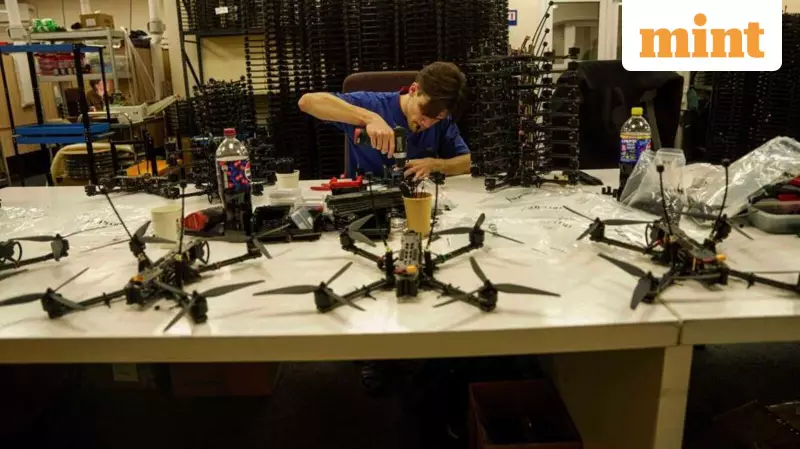
The secret, she explains, lies in Ukraine's democratic spirit and its people's motivation. Ukraine has become the world's leading inventor, producer, and user of drones, with constant technological development on the frontlines and in its cities. It is a "people's war," fueled by civilian donations and self-organized brigades that handle their own procurement and even weapon manufacturing. Freeland criticizes a persistent "Cold War Orientalism" in Western analysis, which over-relies on Kremlin scholars and fails to see that Russia's army is now "the second-strongest army in Ukraine."
The Strategic Imperative: What a Ukrainian Victory Would Mean
A Ukrainian win is framed as a direct strategic benefit for both Europe and the United States. For Europe, a victorious Ukraine would be its shield and arsenal, providing innovative defense industries and doctrines crucial for rearmament, thereby guaranteeing security on its eastern flank. For the US, supporting Ukraine is the most cost-effective way to meet NATO obligations. Furthermore, it serves as the best method to constrain China, as a Russian failure in Ukraine would demonstrate the high cost of territorial expansionism.
Freeland outlines a clear plan for enabling this victory. It starts with providing the weapons Ukraine has long requested: long-range missiles like US Tomahawks or German Taurus to strike Russian military targets and refineries, more drones and AI-enabled systems, and robust air defense like Patriots to protect cities and energy grids. Crucially, she emphasizes that funding is as important as hardware.
She endorses German Chancellor Friedrich Merz's proposal to use frozen Russian central-bank assets as collateral for a massive €140 billion loan to Ukraine. This would allow European support without crippling national budgets or forcing harsh trade-offs on voters, while enforcing the principle that "the aggressor pays."
Ultimately, Freeland stresses that Ukrainians are fighting for a future—sovereignty, security, and a path to EU membership and prosperity. Every step Ukraine has taken toward this democratic future since its 1991 independence referendum has been undermined by the Kremlin. Thus, the war will only end when Ukraine has the borders, army, and alliances needed to deter future aggression. Helping Ukraine achieve this, Freeland concludes, will make the West stronger, too.