In a dramatic escalation of tensions between two key Gulf allies, the United Arab Emirates (UAE) announced on Tuesday, December 31, 2025, that it is pulling its last remaining military personnel out of Yemen. This decision came directly after Saudi Arabia backed a stern 24-hour ultimatum for Emirati forces to leave, issued by Yemen's Saudi-backed leadership.
Saudi-Led Airstrike on Mukalla Port Raises Stakes
The immediate trigger for this crisis was a military strike by the Saudi-led coalition on Yemen's southern port city of Mukalla in the early hours. The coalition stated it targeted a dock used for receiving foreign military support destined for the UAE-backed Southern Transitional Council (STC), a separatist group seeking control over southern Yemen.
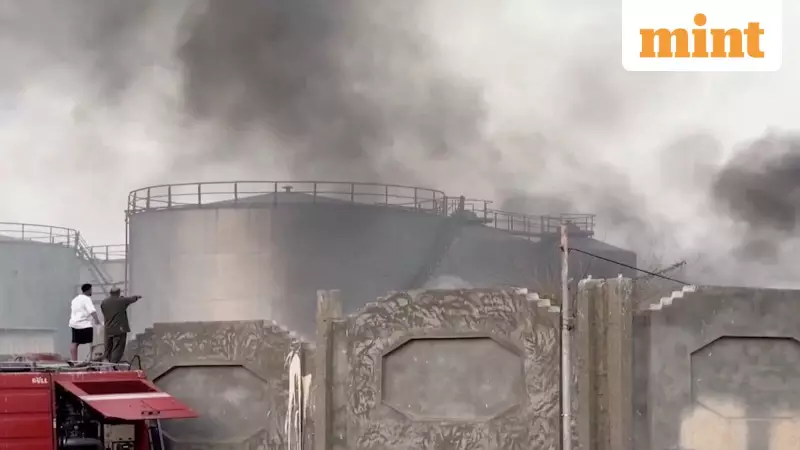
Saudi state media claimed intelligence indicated containers arriving from the UAE's Fujairah port were loaded with weapons and ammunition for Hadramout province. While the coalition asserted the strike caused no casualties, Yemeni television broadcast footage showing black smoke billowing from the port area alongside images of burned vehicles.

UAE Ends Mission and Denies Weapons Claims
In response, the UAE defence ministry, via the state news agency WAM, declared it had voluntarily concluded the mission of its counterterrorism units in Yemen. These were the last Emirati forces in the country since Abu Dhabi formally ended its major military involvement in 2019.
The ministry clarified its presence was limited to "specialised personnel as part of counterterrorism efforts, in coordination with relevant international partners." It added that recent developments necessitated a comprehensive reassessment of its role.
The UAE expressed surprise at the Saudi-led airstrike and firmly denied the weapons shipment allegations. Abu Dhabi insisted the shipments were meant for its own forces and called for a solution based on facts to prevent further escalation.
Diverging Interests and a Public Ultimatum
The rift exposes how the once-aligned partners in the war against Yemen's Iran-aligned Houthi movement have seen their strategic interests diverge. Riyadh has grown increasingly concerned about UAE influence via the STC, accusing Abu Dhabi of pushing the separatists toward Saudi borders and declaring its national security a "red line."
The ultimatum was publicly delivered by Rashad al-Alimi, head of Yemen's Saudi-backed Presidential Leadership Council. In a televised address, Alimi accused the UAE of directing the STC's recent military advances and ordered Emirati forces to leave within 24 hours. He also announced a 72-hour blockade of all ports and crossings and a no-fly zone.
Defying these orders, the STC, led by Aidarous al-Zubaidi (who is also a deputy on the presidential council), rejected the demands. The STC stated the UAE remains a crucial partner against the Houthis and claimed Alimi's orders lacked consensus.
Broader Implications for Region and World
This crisis has immediate international ramifications. The US State Department confirmed that Secretary of State Marco Rubio discussed the Yemen tensions and regional stability with Saudi Foreign Minister Prince Faisal bin Farhan.
Economically, the dispute threatens cohesion within OPEC, where both Saudi Arabia and the UAE are major players. Any sustained disagreement could complicate crucial decisions on global oil output, affecting markets worldwide.
While the UAE's military withdrawal may temporarily de-escalate the situation, major questions linger. Analysts are watching closely to see if Abu Dhabi will continue its political and financial backing of the STC, which now controls much of southern Yemen including Hadramout. The future of the Saudi-led coalition's campaign against the Houthis now faces unprecedented uncertainty due to this deep-seated Gulf rift.