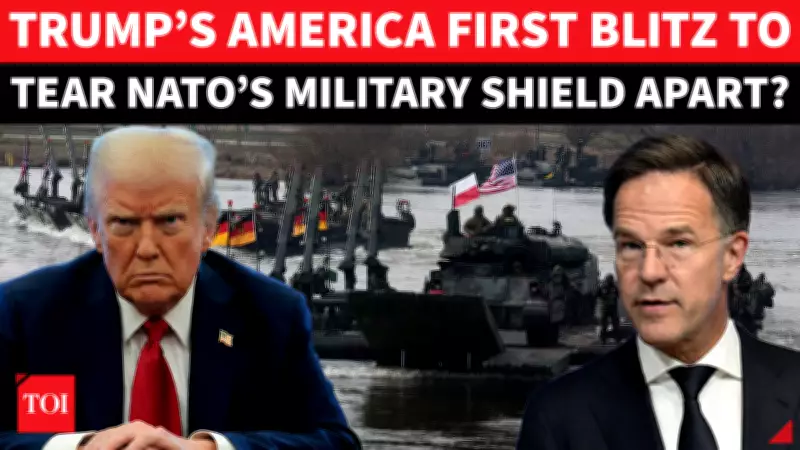
Fresh fears of a deepening NATO crisis are emerging after reports claimed the United States plans to sharply reduce the military assets it makes available to European allies during future conflicts. According to Germany's Spiegel magazine, Washington could cut fighter jets, strategic bombers, destroyers, submarines, and refueling aircraft allocated to NATO operations. The reported move comes amid growing tensions between US President Donald Trump and European allies over defense spending, the Ukraine war, and the Strait of Hormuz crisis. The developments are fueling concerns across Europe that the US may be scaling back its long-standing security commitments to NATO at a time of rising global instability.
Potential Cuts to Key Assets
The proposed reductions would affect a wide range of military hardware that forms the backbone of NATO's deterrence and defense posture. According to Spiegel, the US is considering withdrawing or significantly reducing the number of fighter jets, including F-35s and F-16s, that are pre-assigned to NATO missions. Strategic bombers, such as the B-52 and B-2, which provide long-range strike capabilities, could also be pulled back. Additionally, destroyers and submarines that patrol the Atlantic and Mediterranean, as well as refueling aircraft essential for extending the range of allied jets, might be cut. This would leave European nations more responsible for their own defense, a prospect that many are not prepared to handle given decades of reliance on US support.
Root Causes of the Tensions
The reported plan is the latest flashpoint in a series of disputes between the Trump administration and NATO allies. President Trump has long criticized European members for failing to meet the alliance's target of spending 2% of their GDP on defense. While some countries have increased their budgets, many still fall short. The Ukraine war has further strained relations, with the US accusing Europe of not doing enough to support Kyiv. The Strait of Hormuz crisis, where Iran has threatened shipping and the US has led a naval coalition, has also highlighted diverging priorities. Trump's transactional approach to foreign policy has left many allies questioning the reliability of American security guarantees.

Reactions and Implications
European leaders have reacted with alarm to the Spiegel report. German Defense Minister Boris Pistorius warned that such a move would 'break NATO's backbone' and leave the continent vulnerable. French President Emmanuel Macron called for a 'European defense awakening,' while NATO Secretary General Jens Stoltenberg urged unity. Analysts say that reducing US assets would undermine NATO's ability to respond to multiple crises simultaneously, from a potential Russian aggression to instability in the Middle East. It could also accelerate efforts by European nations to build their own defense capabilities, though this would take years and significant investment. The timing is particularly concerning as global instability rises, with conflicts in Ukraine and the Middle East, and China's assertiveness in the Indo-Pacific.
Broader Context
The reported cuts come amid a series of US policy shifts that have rattled allies. Trump's withdrawal from the Iran nuclear deal, his skepticism of multilateral institutions, and his threats to leave NATO altogether have created an atmosphere of uncertainty. The Spiegel report suggests that the Pentagon is planning for a 'reduced role' in Europe, focusing on strategic deterrence rather than conventional warfare. This would mark a historic shift from the post-World War II era, when the US maintained a large military presence in Europe to counter the Soviet Union. While some US officials have denied the report, the fact that it is being discussed seriously in Washington and European capitals reflects the depth of the current crisis.