The foreign ministers of Thailand and Cambodia held a crucial meeting in China this week, successfully solidifying an agreement for an immediate and lasting ceasefire. This high-level diplomatic engagement comes in the wake of recent deadly clashes along the contentious border shared by the two Southeast Asian nations.
A Diplomatic Breakthrough in Beijing
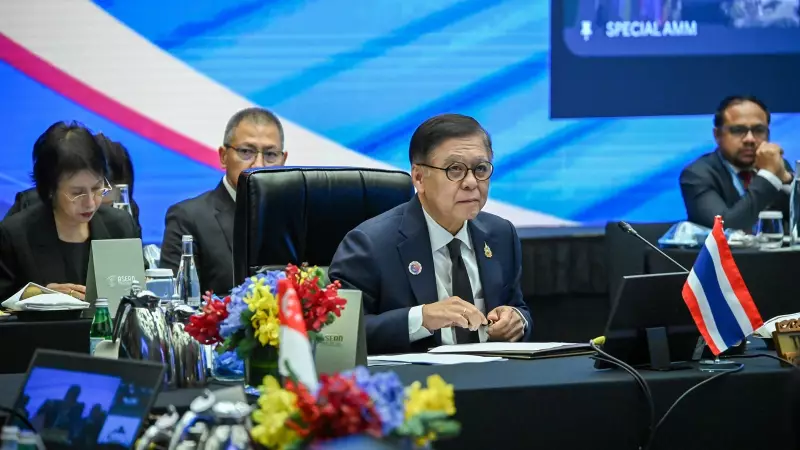
The talks took place in the Chinese city of Luang Prabang, where Thai Foreign Minister Parnpree Bahiddha-Nukara and his Cambodian counterpart, Sok Chenda Sophea, convened under China's mediation. The meeting was strategically timed alongside a broader gathering of the Association of Southeast Asian Nations (ASEAN). Both ministers acknowledged the constructive role played by China in facilitating this critical dialogue aimed at regional stability.
This diplomatic move follows a series of intense military confrontations. On February 7, fierce fighting erupted near the border, resulting in the deaths of at least three Thai paramilitary rangers and several injuries on both sides. The clashes centered around a long-disputed area surrounding the ancient Preah Vihear temple, a UNESCO World Heritage site that has been a flashpoint for decades.

Ceasefire Terms and De-escalation Measures
The core outcome of the Luang Prabang meeting was a firm recommitment to the ceasefire. The ministers issued a joint statement emphasizing the urgent need to prevent any further escalation of violence. They agreed to instruct their respective military commanders to strictly enforce the truce and to establish more effective communication channels to avoid future misunderstandings.
Furthermore, the diplomats discussed concrete steps for de-escalation. These include plans for a potential joint survey of the disputed border area, a process that would require careful coordination and trust-building. The dialogue also touched upon the broader framework of ASEAN solidarity, underscoring the importance of peaceful conflict resolution within the regional bloc.
The Long-Standing Preah Vihear Dispute
The recent violence is rooted in a historical territorial disagreement. The International Court of Justice (ICJ) awarded the temple itself to Cambodia in 1962, but the surrounding 4.6-square-kilometer area remains contested. This legal ambiguity has led to periodic outbreaks of conflict, most notably a prolonged military standoff in 2008 and a significant clash in 2011 that caused casualties and displaced thousands of civilians.
Both nations have stationed troops in the region for years, and despite previous attempts at negotiation, a permanent settlement has remained elusive. The latest clashes demonstrate how quickly tensions can flare up, threatening not only bilateral relations but also the security of the entire ASEAN community.
Implications for Regional Stability and China's Role
The successful facilitation of these talks by China highlights its growing influence as a diplomatic power broker in Southeast Asia. Beijing's active mediation reflects its strategic interests in maintaining a stable and peaceful periphery, crucial for its Belt and Road Initiative and other economic projects in the region.
For ASEAN, the ceasefire is a vital step in preserving its core principle of non-aggression and peaceful co-existence. Continued conflict between two member states undermines the bloc's credibility and its ability to present a unified front on larger geopolitical issues. The resolution of this dispute is seen as a test case for ASEAN's conflict management mechanisms.
The immediate priority now is ensuring the ceasefire holds on the ground. While the diplomatic agreement is a positive development, its success depends entirely on implementation by military units stationed in remote and tense border areas. The planned establishment of direct communication lines between field commanders will be a critical first test of this new commitment to peace.
Observers note that while the meeting has halted the immediate violence, a long-term solution will require more comprehensive negotiations, possibly involving joint development projects or a final, mutually acceptable border demarcation. The path forward remains challenging, but the dialogue in China has reopened a crucial channel for peace.