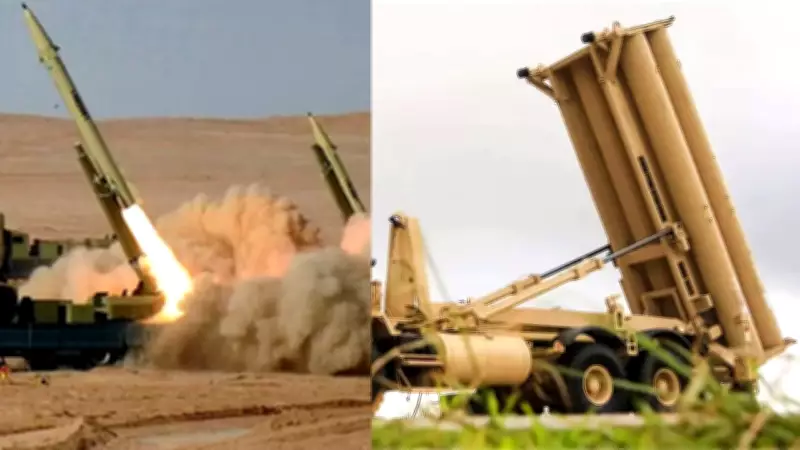
THAAD vs Ballistic Missiles: Inside the High-Stakes US-Iran Defense Battle in the Middle East
The Middle East is witnessing a critical escalation in defense capabilities as the United States deploys its Terminal High Altitude Area Defense (THAAD) systems to counter Iran's growing arsenal of ballistic missiles. This strategic move underscores the intensifying military rivalry between the two nations, with profound implications for regional security and global geopolitics.
US Deployment of THAAD Systems in the Region
The US has strategically positioned THAAD missile defense units across key locations in the Middle East, including bases in countries like Saudi Arabia and the United Arab Emirates. These systems are designed to intercept and destroy short, medium, and intermediate-range ballistic missiles during their terminal phase of flight. The deployment aims to protect American allies and military assets from potential Iranian attacks, reflecting Washington's commitment to bolstering defense alliances in the volatile region.
Iran's Ballistic Missile Capabilities and Threats
Iran has significantly advanced its ballistic missile program, developing a diverse range of missiles capable of striking targets across the Middle East and beyond. These include the Shahab and Sejjil series, which pose a direct threat to US forces and allied nations. Tehran's missile tests and military exercises have raised alarms, prompting the US to enhance its defensive measures. The Iranian government views its missile arsenal as a deterrent against foreign aggression, particularly from the US and Israel.

High-Stakes Defense Dynamics and Regional Tensions
The THAAD vs ballistic missile confrontation is not merely a technological clash but a high-stakes geopolitical battle. It exacerbates existing tensions in the Middle East, where proxy conflicts and diplomatic standoffs are already prevalent. The US deployment is seen as a response to Iran's destabilizing activities, including support for militant groups and nuclear ambitions. Conversely, Iran perceives the THAAD systems as a provocative move that could escalate into a full-blown military conflict.
Implications for Global Security and Defense Strategies
This defense battle has far-reaching consequences for international security. It highlights the evolving nature of modern warfare, where missile defense systems play a crucial role in deterring aggression. The US-Iran rivalry could influence other global powers to reassess their defense postures, potentially leading to an arms race in missile technology. Moreover, it underscores the importance of diplomatic efforts to de-escalate tensions and prevent miscalculations that could trigger broader conflicts.
In summary, the deployment of THAAD systems against Iran's ballistic missiles marks a pivotal moment in the US-Iran defense battle, shaping the security landscape of the Middle East and beyond.