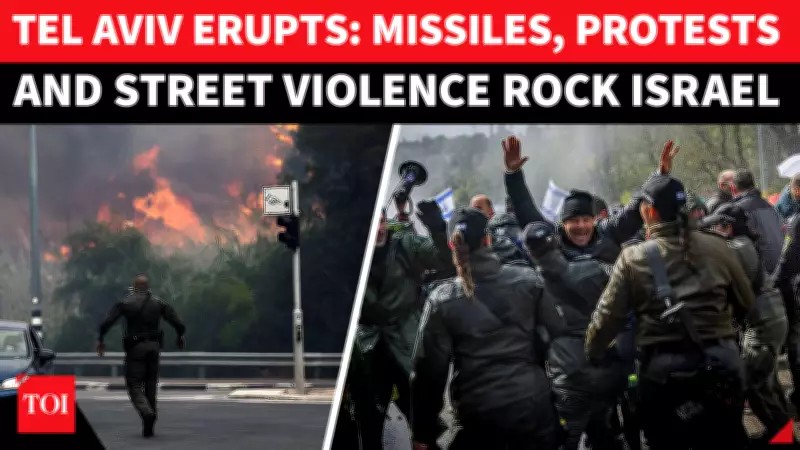
Tel Aviv Gripped by Dual Crises as Missiles and Protests Erupt
The city of Tel Aviv is currently engulfed in a state of severe turmoil, facing a simultaneous onslaught from both internal civil unrest and external military threats. This volatile situation has pushed Israel's bustling metropolis to the brink, with citizens grappling with the stark reality of conflict on multiple fronts.
Violent Clashes at Habima Square Amid Anti-War Demonstrations
Internal tensions reached a boiling point at Habima Square, where large-scale anti-war protests rapidly escalated into violent confrontations with law enforcement. Despite a recent High Court ruling that permits protests of certain sizes, the demonstrations spiraled out of control, resulting in police deploying forceful measures to contain the situation. Several demonstrators were detained during the clashes, which saw scenes of chaos and resistance.
This public dissent underscores a growing wave of frustration among Israeli citizens, who are increasingly vocal about their opposition to the ongoing conflicts. The protests highlight a deep-seated societal divide, even as the nation faces external dangers.

Missile Alerts Sound Across Central Israel
Simultaneously, Tel Aviv and central Israel were placed on high alert following confirmed missile launches from Iran-backed Houthi forces based in Yemen. Air raid sirens blared across the region, sending residents scrambling for shelter and heightening the sense of imminent danger.
In addition to the threats from the south, Israeli defense systems have detected further missile activity originating from northern Iran. These coordinated attacks represent a significant escalation in the regional conflict, putting immense pressure on Israel's military and civilian infrastructure.
A Perfect Storm of Domestic and International Pressures
The convergence of violent domestic protests and external missile strikes creates a uniquely precarious scenario for Tel Aviv. This dual crisis not only strains public safety resources but also amplifies concerns about broader regional escalation. The Israeli Defense Forces (IDF) are now operating under extreme conditions, managing both internal security and defense against foreign aggressors.
Experts warn that this combination of civil unrest and military threats could destabilize the region further, potentially drawing in other international actors. The situation remains fluid, with authorities urging citizens to remain vigilant and follow official safety protocols.
The ongoing events in Tel Aviv serve as a stark reminder of the fragile security landscape in the Middle East. As missiles threaten from abroad and protests erupt at home, the city finds itself at the epicenter of a conflict that shows no signs of abating. The coming hours and days will be critical in determining whether this volatility leads to de-escalation or further confrontation.