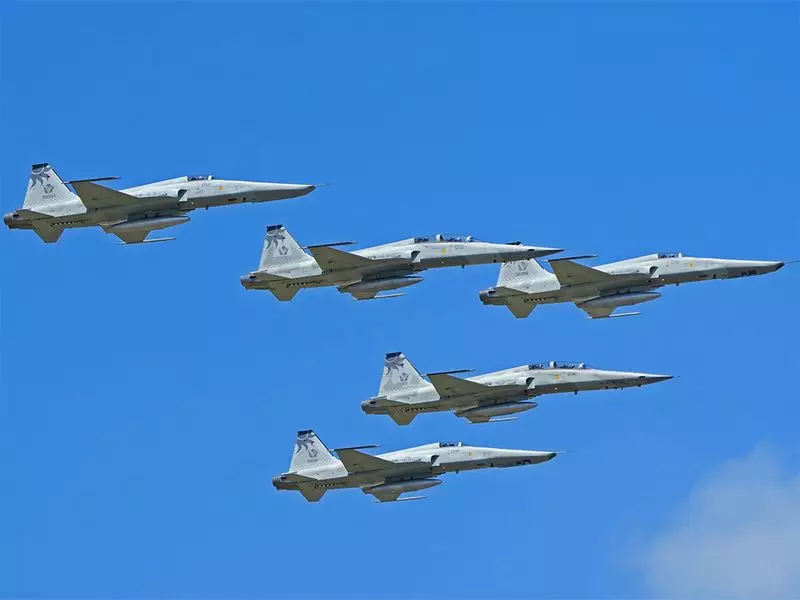
Taiwan's military has reported a fresh wave of Chinese military activity in the vicinity of the island, marking another day of heightened tensions in the strategically vital Taiwan Strait. The Ministry of National Defence (MND) in Taipei announced that it had detected multiple sorties by People's Liberation Army (PLA) aircraft and the movement of several naval ships operating around Taiwanese territory.
Details of the Military Movements
According to the official statement released on Sunday, Taiwan's armed forces monitored two Chinese military aircraft entering the island's air defence identification zone (ADIZ) during a 24-hour period leading up to 6 am local time. More significantly, the surveillance also identified nine vessels belonging to the PLA Navy conducting operations in the waters surrounding Taiwan.
The Taiwanese military maintained a high state of alert, deploying its own assets to monitor the situation closely. As per standard protocol, air defence missile systems were activated to track the Chinese aircraft, and naval and land-based units were tasked with following the movements of the ships. The defence ministry emphasised that its forces were keeping a vigilant watch on the situation and would respond appropriately to protect Taiwan's sovereignty.

Context of Rising Straits Tensions
This latest incident is part of a persistent pattern of increased military pressure from Beijing, which claims the self-ruled democratic island as part of its territory. China has significantly ramped up its military activities around Taiwan in recent years, including regular air incursions into the ADIZ and large-scale naval drills. These actions are widely seen as demonstrations of force intended to coerce Taipei and signal Beijing's opposition to any moves toward formal independence.
The timing of such patrols is often viewed as politically significant. While the immediate trigger for this specific sortie was not specified, these operations consistently underscore the ongoing and serious geopolitical friction in the Indo-Pacific region. The Taiwan Strait is a critical international waterway, and instability there has global repercussions, drawing concern from partners like the United States and Japan, who have reiterated the importance of peace and stability across the strait.
Regional Reactions and Strategic Implications
Taiwan's consistent response has been to publicise these incursions, a strategy aimed at increasing transparency and rallying international awareness about the pressure it faces. The island's government has repeatedly called for peaceful resolution of differences and has bolstered its own defensive capabilities in the face of what it terms "grey-zone" harassment tactics.
For its part, China's military has not commented on this specific patrol but routinely describes such activities as "necessary drills" to safeguard national sovereignty. The PLA asserts that these operations are legitimate and conducted in accordance with international law. However, the frequency and scale of these missions contribute to an environment of sustained military brinkmanship.
Analysts suggest that these near-daily probes serve multiple purposes for Beijing: they test and wear down Taiwan's defence responses, establish a "new normal" of Chinese military presence, and send a clear signal against any foreign support for Taiwan. The presence of nine naval vessels, as reported in this instance, indicates a substantial naval component to the operation, extending the pressure beyond the aerial domain.
The situation remains a potential flashpoint. The international community, including India which has its own complex relationship with China, watches these developments closely, as they impact broader regional security and the rules-based international order. The continued military activity ensures that cross-strait relations remain at the top of Asia's security agenda.