Syrian President's Strategic Gamble Yields Major Victory Against U.S.-Backed Forces
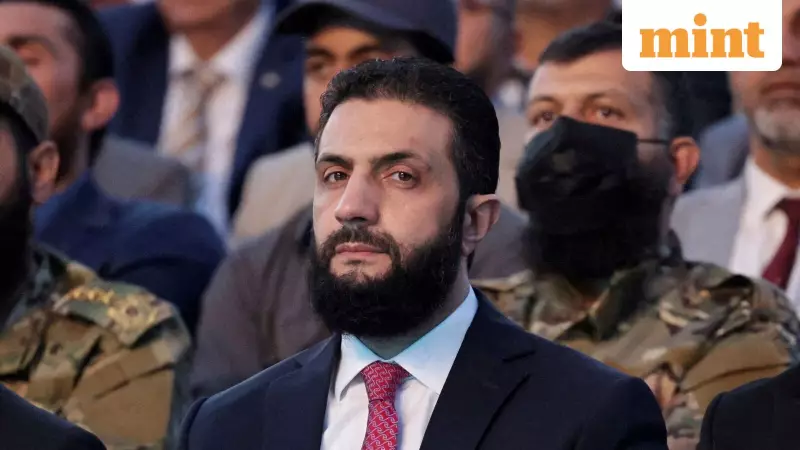
In a bold military maneuver that defied Washington's warnings, Syrian President Ahmed al-Sharaa has successfully executed a swift offensive against Kurdish-led militia forces in northeast Syria. This calculated risk has not only expanded Damascus's territorial control but has also significantly fractured the U.S.-backed Syrian Democratic Forces (SDF), potentially reshaping the geopolitical landscape of the region.
A High-Stakes Offensive Defies American Threats
President Sharaa ordered the aggressive military action despite explicit threats from the United States government regarding the reimposition of sanctions. U.S. military officials had expressed grave concerns that such an offensive could endanger American soldiers stationed in the area and potentially lead to the escape of thousands of Islamic State prisoners held in detention facilities. However, Sharaa's gambit ultimately proved successful, demonstrating his reputation as a daring military tactician willing to jeopardize relations with Washington to achieve strategic objectives.
The offensive unfolded with remarkable speed, as Sharaa's lieutenants successfully persuaded Arab factions within the SDF to defect and align with the Syrian government. This internal fragmentation caused the Kurdish-led militia to unravel within days, forcing their retreat from significant portions of northeast Syria. The rapid collapse of SDF resistance surprised many observers who had anticipated a prolonged conflict.

Far-Reaching Consequences for U.S. Military Presence
The successful offensive has triggered serious discussions among senior U.S. military officials about a broader withdrawal from Syria after more than a decade of presence in the country. This development represents a significant shift in Pentagon strategy and could substantially reduce America's military footprint in the Middle East.
President Sharaa, who once fought as an insurgent in Iraq and was captured by U.S. forces, has cultivated an unexpected relationship with the Trump administration. Washington initially backed his leadership to prevent a dangerous power vacuum following the overthrow of former President Bashar al-Assad in 2024. Despite his militant past, which continues to concern some U.S. lawmakers and military officials, Sharaa has maintained this support. President Trump recently praised the Syrian leader's "tremendous progress" and expressed confidence in his ability to "put it all together."
Strategic Victory Built on Political Maneuvering
The takeover of northeastern Syria represents Sharaa's most significant strategic achievement since leading the rebel offensive that toppled the Assad regime in 2024. That earlier campaign ended thirteen years of devastating conflict that claimed approximately half a million lives and left Syrian cities in ruins.
This latest operation broke a prolonged stalemate that had persisted through more than a year of negotiations between the SDF and the new Damascus government. While SDF leader Mazloum Abdi had agreed to a merger with the Syrian army in U.S.-brokered talks, he had demanded continued autonomy and preservation of military units. Sharaa's rapid military moves effectively settled these contentious issues on the ground.
Analysts note that political acumen rather than pure military strength contributed significantly to this victory. Sharaa leveraged connections to eastern Syria through key officials originally from the region, including his intelligence chief and foreign minister. Last year, he appointed Jihad Issa Al-Sheikh (known as Abu Ahmed Zakour) to oversee liaison with Arab tribes in areas long controlled by the SDF. This strategic placement helped persuade tribal fighters near Deir Ezzour to switch allegiances, contributing to the SDF's rapid fragmentation.

Exploiting Regional Vulnerabilities and U.S. Priorities
Sharaa's success stems partly from his accurate assessment of regional vulnerabilities and U.S. strategic priorities. He launched his offensive against the Assad regime when Russia was preoccupied with the Ukraine conflict and Iran was weakened by Israeli military strikes, leaving Damascus particularly vulnerable. Similarly, he recognized fissures within the SDF between Kurdish, Arab, and other factions, as well as political leanings among Arab residents of major cities like Raqqa and Deir Ezzour toward the new government.
The Syrian president also capitalized on the Trump administration's desire for an exit strategy for American troops remaining in Syria. Trump's special envoy for Syria, Tom Barrack, argued this week that the rationale for backing the SDF had diminished following Assad's fall. Barrack noted that Damascus is now both willing and positioned to assume security responsibilities, including control of ISIS detention facilities.
Significant Risks and Ongoing Challenges
Despite this strategic victory, Sharaa and the nascent Damascus government face substantial risks. The offensive has galvanized Kurdish opposition both within Syria and across the wider region. The future of U.S. troops at multiple outposts in northeast Syria remains uncertain, with officials questioning whether they can maintain their presence given the SDF's severe weakening.
During the offensive, tensions escalated as U.S. forces shot down at least one Syrian government drone near an American base, while Sharaa's forces attacked SDF barracks at the same location. Perhaps the most significant challenge involves maintaining discipline among government forces, as any human rights violations against Kurdish civilians or retreating SDF fighters could quickly turn Syrian public opinion and international sentiment against the new leadership.
In response to security concerns, the U.S. military began transferring thousands of Islamic State prisoners from northeastern Syria to Iraq, with approximately 7,000 of 9,000 detainees being relocated to Iraqi custody. This precautionary measure aims to prevent potential escapes amid the shifting security landscape.
As the situation continues to evolve, Sharaa's bold gamble has undoubtedly altered the balance of power in Syria, though the long-term stability of his gains remains to be seen amidst ongoing regional complexities and international scrutiny.