Chaos and violence gripped coastal cities in western Syria on Sunday as protests led by the minority Alawite community descended into deadly clashes with counterdemonstrators. The unrest, which left at least four people dead and dozens injured, was a direct response to a fatal bombing days earlier at an Alawite mosque.
From Grief to Anger: Protests Erupt After Homs Bombing
The immediate trigger for Sunday's turmoil was a bombing on Friday at an Alawite mosque in the Syrian city of Homs. That attack claimed eight lives and left 18 others wounded. While Syrian authorities have not named a suspect, a little-known group called Saraya Ansar al-Sunna claimed responsibility on Telegram, stating it targeted the Alawite sect, an offshoot of Shiite Islam.
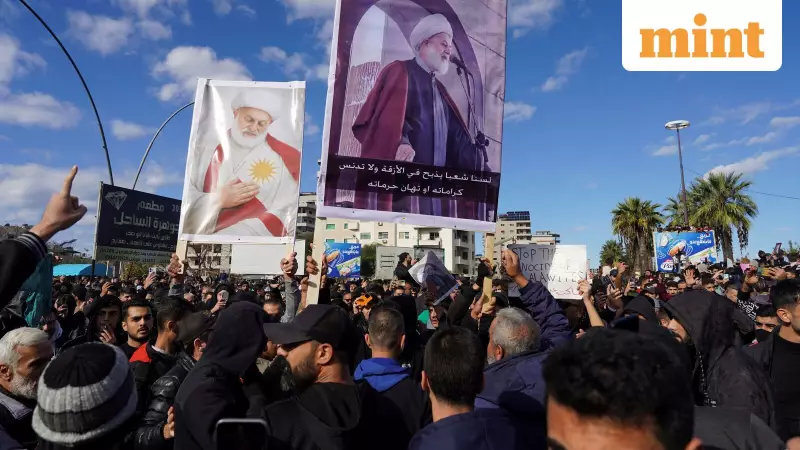
In the wake of the bombing, thousands of Alawites gathered in the coastal cities of Latakia and Tartous. The protests on Sunday were called for by Alawite sheikh Ghazal Ghazal, who leads the Supreme Alawite Islamic Council from abroad.

Chaotic Scenes and Escalating Violence
What began as demonstrations quickly spiraled into violence. In Latakia, protesters assembled at Azhari Square demanding the release of thousands of Alawite prisoners. The situation deteriorated when gunshots were heard, prompting security forces to fire warning shots into the air.
News agencies reported gunfire and stone-pelting between Alawite protesters and counterdemonstrators. Videos from the scene showed chaotic efforts to carry away the wounded on foot. The violence was not confined to one city.
In Tartous, a grenade was lobbed into a police station, injuring two members of the security forces, according to state television. Meanwhile, in Latakia, several vehicles belonging to security forces were set on fire.
Mounting Casualties and a Sectarian Divide
The human cost of the day's events became starkly clear. The Associated Press, which had a reporter on the ground in Latakia, confirmed at least four people were killed. Three of the deaths appeared to be from stone-pelting, while one was from a gunshot wound. The identities of the deceased were not immediately clear.
Syria's state-run SANA news agency reported a higher injury toll, stating that 60 people were wounded by stabbings, stone-pelting, and gunfire affecting both security personnel and civilians.
This incident is the latest in a worrying trend of sectarian violence that has escalated since the fall of President Bashar al-Assad's regime in December 2024. Assad, an Alawite, had overseen a system where Alawites were overrepresented in government and security forces. Since his escape to Russia, the community has complained of discrimination and seen many young men detained without charge, fueling resentment and instability.
The deadly ambush on security forces by Assad loyalists in March, which left hundreds dead, mostly Alawites, highlighted the fragile state of affairs. While the situation had seen some improvement, Friday's mosque bombing and Sunday's violent protests signal that Syria's sectarian tensions are far from resolved.