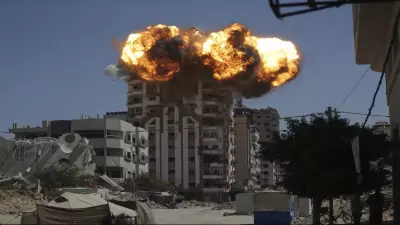
A powerful bomb explosion ripped through a mosque in Syria's coastal region, leading to a day of violent unrest and deadly clashes. The attack, which targeted a place of worship for the minority Alawite community, has further inflamed sectarian tensions in a country already ravaged by years of conflict.
Deadly Blast at Alawite Mosque
The incident occurred on Friday, May 31, at the Al-Taqwa Mosque in the town of Al-Suqaylabiyah, located in the Homs province. According to reports from the Syrian Observatory for Human Rights (SOHR), an explosive device was planted inside the mosque and detonated. The blast resulted in the tragic deaths of at least six people and left several others wounded.
Al-Suqaylabiyah is situated in a government-held area and is predominantly inhabited by Alawites, the same sect to which Syrian President Bashar al-Assad belongs. The Alawite community has been a key pillar of support for the Assad regime during the long-running Syrian civil war. Attacks directly targeting their religious sites are relatively rare and carry significant symbolic weight.

Violent Protests and Fatal Clashes Erupt
In the immediate aftermath of the bombing, angry protesters took to the streets of Al-Suqaylabiyah. The crowd's fury quickly turned toward a military checkpoint on the outskirts of the town. Protesters accused the security forces of negligence and failing to protect the community.
The demonstration escalated into a violent confrontation. SOHR reported that gunfire erupted during the clashes at the checkpoint. This exchange of fire led to additional casualties. At least one person was killed and three others were injured in this second wave of violence, separate from the mosque bombing itself. The total death toll for the day, combining both incidents, rose to at least seven.
Local sources indicated that the protesters were demanding the removal of the checkpoint commander, holding him responsible for the security lapse that allowed the bombing to happen. The situation highlighted the deep-seated frustrations and fragile security even in areas nominally under government control.
Aftermath and Escalating Tensions
No group immediately claimed responsibility for the mosque bombing. However, the attack fits a pattern of attempts to destabilize government-held areas and stir sectarian strife. The Syrian conflict, which began in 2011, has often drawn in regional and international powers, with various factions vying for control.
The deadly bombing and the subsequent violent protests underscore the precarious and volatile security situation in Syria. Even as large-scale fighting has diminished in recent years, targeted attacks, economic collapse, and political instability continue to plague the nation. The incident in Al-Suqaylabiyah is a stark reminder that the roots of the conflict remain unresolved and that communal tensions can ignite rapidly.
Analysts fear that such attacks could lead to cycles of retaliation, further complicating any prospects for national reconciliation and lasting peace. The Syrian government has yet to issue a detailed official statement on the day's events, which have sent shockwaves through the community and raised alarms about a potential new phase of localized violence.