

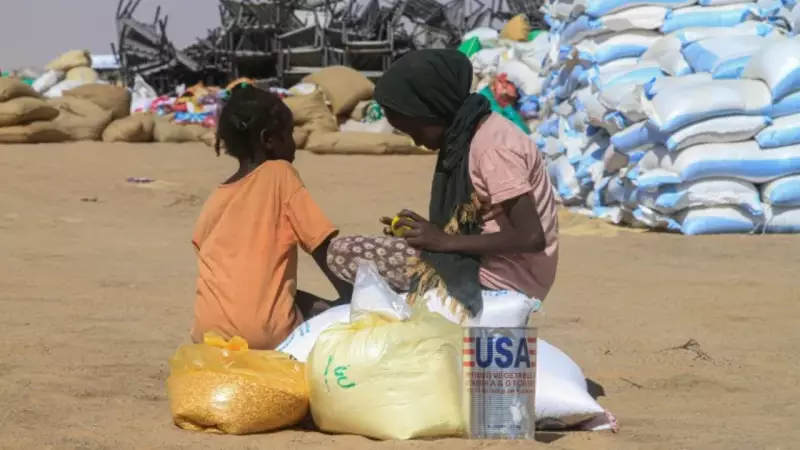
The brutal civil war in Sudan has opened a dangerous new front, forcing tens of thousands of civilians to flee for their lives amid fears of widespread atrocities. The oil-rich region of Kordofan has become the latest battleground between the Sudanese army and the paramilitary Rapid Support Forces (RSF), triggering a massive displacement crisis.
A Perilous Escape on Foot
Ibrahim Hussein, a 47-year-old farmer, embodies the desperation. He recently led his family of seven on an eight-day trek through treacherous terrain to escape fighting near Keiklek, close to the South Sudanese border. They left behind their animals and unharvested crops, everything they owned, finally reaching the relative safety of Kosti, an army-controlled city in White Nile state roughly 300 kilometres south of Khartoum.
"For most of the war, we lived in peace," Hussein told AFP from Kosti. "But when the RSF came close, we were afraid. So we left, most of the way on foot." His family navigated the rocky paths of the Nuba Mountains and surrounding valleys, passing through both paramilitary and army checkpoints.

RSF Gains and a Deepening Humanitarian Catastrophe
Emboldened by capturing the army's last Darfur stronghold in October, the RSF and its allies have launched a full-scale assault on Kordofan. This month, they consolidated control over West Kordofan and seized Heglig, a key town on Sudan's largest oil field. Their siege tightens around the army-held cities of Kadugli and Dilling, where hundreds of thousands face the threat of mass starvation.
The human cost is staggering. The United Nations reports that nearly 53,000 people have been displaced from Kordofan recently. In just two days this week, almost 4,000 hungry and terrified people arrived in Kosti. "Most of those arriving are women and children. Very few adult men are with them," said Mohamed Refaat, Sudan chief for the UN's International Organisation for Migration (IOM). Many men stay behind, fearing abduction or execution.
With main roads unsafe, families are taking "long and uncertain journeys," according to aid group Mercy Corps. Trips that once took four hours now force people to walk for 15 to 30 days through isolated, mine-littered areas. The violence is indiscriminate; this month, drone strikes hit a kindergarten and hospital in Kalogi, South Kordofan, killing 114 people, including 63 children.
Strained Sanctuaries and Impossible Choices
Kosti, a relatively small city already hosting South Sudanese refugees, is buckling under the strain. New arrivals, like farmer Adam Eissa, 53, shelter in overcrowded schools-turned-shelters. Eissa paid $400 to transport his wife, four daughters, and elderly mother via backroads to avoid RSF checkpoints. For most Sudanese after nearly three years of war, such a sum is impossible, leaving them to walk or stay behind.
Transport costs have skyrocketed, with prices from El-Obeid increasing more than tenfold in two months, severely limiting escape options. Those trapped, like 56-year-old trader Hamdan in besieged Kadugli, live in terror. "I sent my family away... Now I am looking for a way to leave," he said via satellite internet.
Civil servant Kassem Eissa, head of a family of eight in Kadugli, faces an impossible dilemma: "Getting out is expensive and the road is unsafe," he said, "but we're struggling to get enough food and medicine."
The UN has issued repeated warnings, fearing atrocities in Kordofan mirroring those in Darfur—summary executions, abductions, and rape. Refaat starkly warned that without a ceasefire around Kadugli, "the scale of violence we saw in El-Fasher could be repeated." As the war grinds into its 31st month, the people of Kordofan are caught between a brutal battlefield and a desperate fight for survival.






