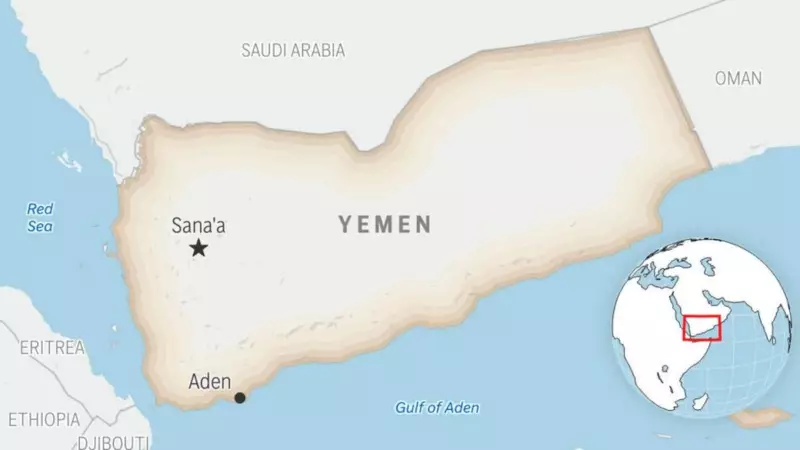
Saudi Arabia has carried out a series of airstrikes in Yemen, a dramatic military response triggered by the discovery of a clandestine shipment of weapons. The arms, originating from the United Arab Emirates (UAE), were intended for southern separatist forces, exposing deep fissures within the coalition that has been fighting Houthi rebels for nearly a decade.
The Trigger: A Covert Arms Shipment Intercepted
The Saudi-led coalition confirmed the military action, stating it was a direct retaliation. Intelligence sources revealed that a vessel carrying a significant cache of weapons had departed from Dubai in the UAE. Its destination was the port of Aden, a stronghold controlled by the Southern Transitional Council (STC). The STC, which seeks an independent South Yemen, is a nominal ally of the Saudi-led coalition but has frequently clashed with the internationally recognized Yemeni government, also backed by Riyadh.
The intercepted shipment reportedly contained a variety of military equipment, raising immediate alarms in Saudi Arabia. The discovery of this covert supply line from the UAE to the STC represented a severe breach of trust within the anti-Houthi alliance, prompting the swift aerial bombardment.

Deepening Rifts in the Anti-Houthi Coalition
This incident starkly highlights the complex and often contradictory web of alliances in the Yemen conflict. While Saudi Arabia and the UAE have been formal partners in the coalition since 2015, their long-term strategic goals in Yemen have increasingly diverged. The UAE has historically provided training and support to the STC's security forces, viewing the separatist group as a more reliable bulwark against Islamist factions and a tool to secure its interests in southern Yemen's ports and coastline.
For Saudi Arabia, however, the primary objective remains the restoration of the Yemeni government led by President Abd-Rabbu Mansour Hadi and his successors, and countering the influence of Iran-backed Houthi rebels. The arming of a faction that challenges the authority of the recognized government is seen in Riyadh as a direct threat to its political roadmap for Yemen and a destabilizing act that fragments the coalition's front.
The airstrikes, therefore, serve a dual purpose: to destroy the delivered military capabilities and to send an unequivocal message to both the STC and its Emirati backers about the limits of Saudi tolerance.
Regional Repercussions and a War-Weary Yemen
The fallout from this event extends beyond immediate military damage. It risks causing a significant diplomatic rift between Saudi Arabia and the UAE, two of the most powerful Arab Gulf states. Such internal fractures only strengthen the position of the Houthi movement, which has recently been involved in ceasefire talks and prisoner exchanges with Saudi Arabia, aiming to end the broader conflict.
For the people of Yemen, already enduring one of the world's worst humanitarian crises, this escalation between their nominal protectors spells more danger and instability. It threatens to open a new, violent chapter in the long-running civil war, potentially pitting former allies against each other on the ground and further complicating any path to a comprehensive peace.
Analysts warn that this episode underscores the fragmented nature of the Yemen war, where local power struggles and regional rivalries often take precedence over the stated goal of defeating the Houthis. The Saudi airstrikes in response to the UAE weapons shipment mark a dangerous pivot, proving that the battle for Yemen's future is not just a single conflict but a multi-layered struggle for influence with no clear end in sight.