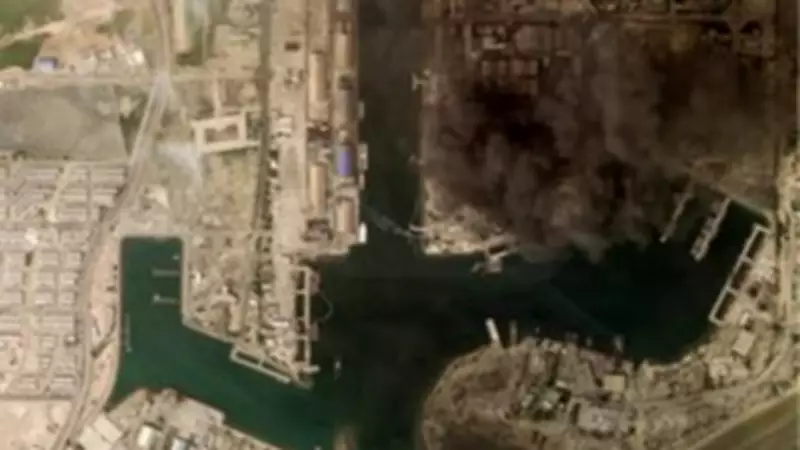
Satellite Imagery Exposes Widespread Destruction in Iran and UAE Following Military Strikes
Recently declassified satellite photographs have provided a comprehensive aerial perspective of substantial damage inflicted upon strategic Iranian military installations, as well as critical infrastructure in the United Arab Emirates. The images, captured and released by the commercial satellite operator Planet Labs and the United States spatial intelligence firm Vantor, document the precise and far-reaching impact of coordinated strikes conducted by the United States and Israel.
Devastation Across Key Iranian Military Sites
The visual evidence reveals heavy damage at the strategically vital Konarak naval base in southern Iran. Furthermore, significant destruction is visible at Tehran's naval headquarters located in Bandar Abbas on the Persian Gulf coastline. The satellite imagery distinctly shows multiple burning ships and extensively damaged port facilities, underscoring the scale and intensity of the assaults on Iran's maritime defense infrastructure.
In addition to naval assets, the photographs confirm a successful strike on a hardened bunker at the Bushehr air base. The attack left a massive crater and completely destroyed several smaller adjacent structures, as reported by intelligence analysts. Separate strikes targeted the Choqa Balk drone manufacturing and operations facility in western Iran. Critical radar systems at the Zahedan air base in eastern Iran, situated near the borders with Pakistan and Afghanistan, were also neutralized. These two targeted facilities are approximately 800 to 900 miles apart, demonstrating the wide geographic scope of the operations.

Damage Extends to Air Bases and Capital City
Satellite images further illustrate consequential damage to aircraft parked on the tarmac at the Shiraz air base. Clear scorch marks and scattered debris are visible around several aircraft parking areas, indicating direct hits. Images from Planet Labs also depict thick, dark plumes of smoke rising above Tehran, signaling powerful explosions and subsequent fires within the Iranian capital itself. This smoke evidence strongly suggests the conflict escalated beyond isolated military targets, reaching into the very heart of Iran's political and administrative center.
Strikes Impact Critical UAE Infrastructure
The satellite reconnaissance also reveals notable damage in the port city of Sharjah in the United Arab Emirates, the nation's third-most populous urban center after Dubai and Abu Dhabi. Most significantly, the imagery shows that the region's largest maritime hub, Jebel Ali Port, was successfully targeted. This indicates that the retaliatory strikes extended beyond purely military objectives to include key economic and logistical infrastructure, potentially crippling regional trade flows.
Context of the Escalating Conflict
The release of this detailed satellite imagery follows confirmed US-Israeli strikes that resulted in the death of Iran's long-time supreme leader, Ayatollah Ali Khamenei, along with several other high-ranking regime officials. In a related development, US President Donald Trump issued a stark warning, stating that Iran's new leader, Mojtaba Khamenei, is "not going to last long" without American approval, as the military campaign, dubbed Operation Epic Fury, enters its third consecutive week. The visual proof of widespread destruction adds a new layer of understanding to the ongoing and volatile geopolitical confrontation in the Middle East.