Satellite Imagery Reveals Extensive Damage to Iranian Military Installations
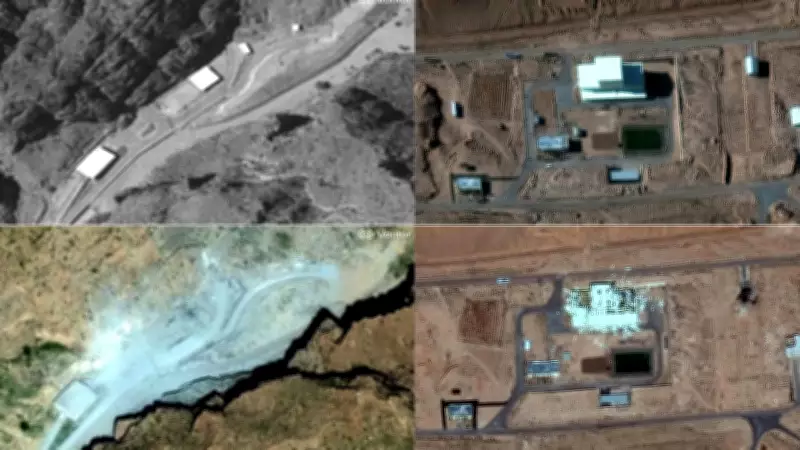
Newly released satellite images provide stark visual evidence of the destruction wrought upon Iranian military bases following a series of coordinated Israeli airstrikes. The comparative before-and-after photographs, captured by satellite surveillance, document significant structural damage across multiple strategic locations within Iran, highlighting the intensity of recent military operations in the ongoing regional conflict.
Detailed Analysis of Impact Across Key Military Sites
The satellite imagery specifically focuses on several critical Iranian military facilities, offering a clear timeline of the attacks. At the Kerman Air Base, images from February 14, 2026, show intact buildings, while those from March 9, 2026, reveal substantial damage following an airstrike. Similarly, at a military facility in Darab, photographs from August 20, 2025, contrast sharply with images from March 9, 2026, demonstrating extensive destruction.
Further evidence comes from the Khorgu military facility, where satellite pictures from February 20, 2026, and March 9, 2026, show visible damage to infrastructure. Additionally, imagery of the 8th Tactical Fighter Base in Isfahan displays Iranian fighter jets before and after attacks, with the later image from March 9, 2026, illustrating the aftermath of the strikes.

Context of Escalating Regional Conflict
These images were released amid heightened tensions following reported strikes by the United States and Israel targeting Iran's military and strategic infrastructure. The conflict escalated significantly after coordinated strikes on February 28, 2026, which resulted in the death of Iran's Supreme Leader Ali Khamenei and triggered widespread violence across the Middle East.
Israeli Defense Minister Israel Katz has declared that the joint bombing campaign against Iran will continue "as long as necessary," asserting that the strikes have inflicted heavy losses on Tehran's forces. Katz emphasized that the operation has no time limit and will persist until all objectives are achieved, with strikes continuing "day after day, target after target" across Iran.
Human Toll and Regional Retaliation
The conflict has resulted in substantial casualties, with officials reporting at least 1,230 deaths in Iran, 550 in Lebanon, and 12 in Israel. The United States Department of Defense confirmed that approximately 140 U.S. service members have been wounded, with 108 returning to duty, eight suffering serious injuries, and seven killed. An Israeli intelligence assessment suggests that Iran's new supreme leader was wounded at the onset of the conflict.
In retaliation, Iran has launched attacks on commercial ships across the Persian Gulf and targeted Dubai International Airport, escalating tensions in the oil-rich region and raising global energy security concerns. This cycle of strikes and counterstrikes continues to fuel instability across the Middle East.
Strategic Implications and Ongoing Operations
The satellite images not only document physical damage but also underscore the strategic depth of the military campaign. The targeting of multiple facilities across Iran indicates a comprehensive approach to degrading Iran's military capabilities. The visual evidence supports Israeli claims of inflicting significant damage on what they describe as "Iranian terror regime infrastructure."
As the conflict enters its critical phase, with both sides sustaining losses and regional dynamics shifting, the satellite imagery serves as a powerful testament to the scale and impact of modern aerial warfare. The continued release of such evidence is likely to influence international perceptions and diplomatic efforts aimed at de-escalating the situation.