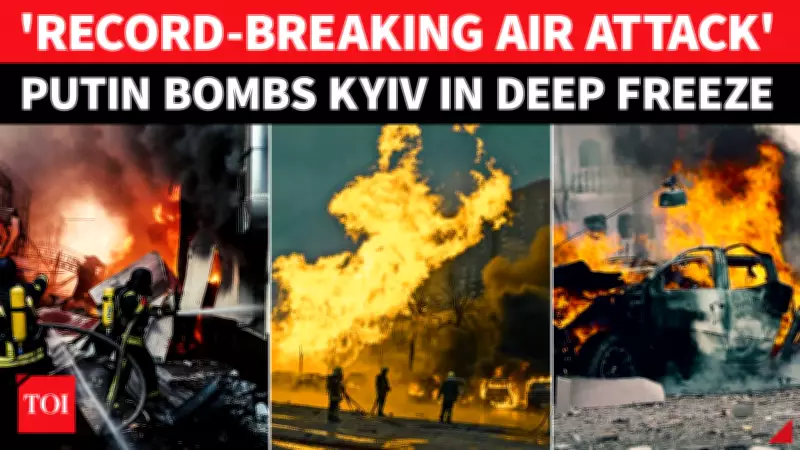
Russia Unleashes Unprecedented Missile Barrage on Ukraine's Capital
In a chilling escalation of the ongoing conflict, Russia has launched what Ukrainian officials describe as a record-breaking ballistic missile attack on Ukraine, with the capital Kyiv bearing the brunt of the assault. The strikes occurred as temperatures plummeted to a bone-chilling minus 20 degrees Celsius, exacerbating the humanitarian crisis in the war-torn nation.
Massive Aerial Onslaught Targets Critical Infrastructure
According to Ukrainian authorities, the Russian military fired an astonishing 450 drones and more than 70 ballistic and cruise missiles in a coordinated attack that targeted multiple cities across Ukraine. The primary focus of the assault was the country's energy infrastructure, with power plants, substations, and other critical facilities coming under direct fire.
The timing of this devastating attack is particularly significant, coming just days after the expiration of an energy truce agreement that had provided temporary relief to Ukrainian civilians. The consequences have been severe, with thousands of residents in Kyiv and other affected areas left without heat, electricity, or running water during one of the coldest periods of the year.

Humanitarian Crisis Deepens in Freezing Conditions
As the missile barrage rained down on Ukrainian cities, desperate civilians were forced to seek shelter in underground metro stations and other makeshift facilities. The combination of intense bombardment and extreme winter weather has created what humanitarian organizations describe as a perfect storm of suffering for the Ukrainian population.
- Residential areas plunged into darkness and cold
- Emergency services stretched beyond capacity
- Vulnerable populations including elderly and children at particular risk
- Transportation and communication networks severely disrupted
Diplomatic Implications and Political Fallout
The timing of this massive military operation has raised serious questions about Russia's commitment to diplomatic solutions. The attack occurred just one day before scheduled peace talks involving Ukraine and the United States, prompting Ukrainian President Volodymyr Zelensky to accuse Moscow of deliberately choosing terror over diplomacy.
President Zelensky's strong condemnation contrasted sharply with the response from former U.S. President Donald Trump, who stated that the attacks did not violate the limited pause he had personally requested from Russian President Vladimir Putin. This divergence in perspectives highlights the complex geopolitical dynamics surrounding the conflict.
International Reactions and Future Implications
As Kyiv anxiously awaits Washington's formal response to this latest escalation, the international community faces renewed pressure to address the worsening situation. The attack represents not just a military escalation but a deliberate targeting of civilian infrastructure during extreme weather conditions, raising concerns about potential war crimes.
- The assault demonstrates Russia's continued willingness to escalate despite diplomatic efforts
- Energy infrastructure targeting represents a strategic shift in Russian tactics
- The humanitarian impact during winter conditions could have long-term consequences
- International response will test the unity of Ukraine's allies
This latest development in the Russia-Ukraine conflict underscores the volatile nature of the situation and the challenges facing diplomatic efforts to resolve the crisis. As freezing temperatures continue to grip Ukraine, the combination of military aggression and environmental hardship creates what many observers describe as one of the most difficult phases of the war for the Ukrainian people.