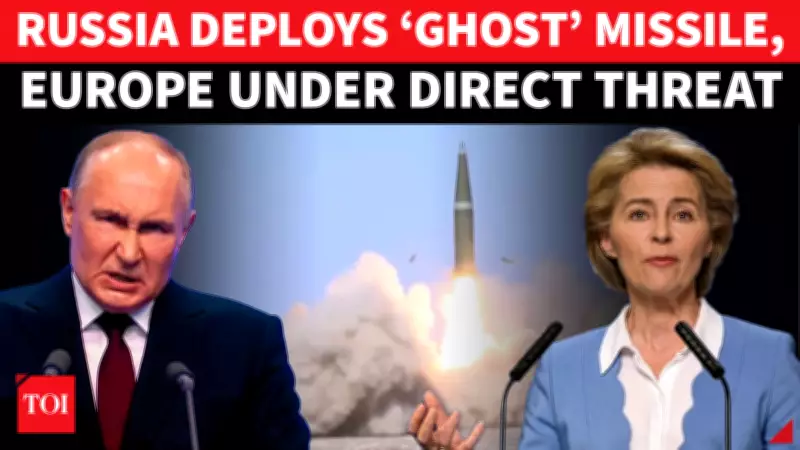
Russia's Iskander-K Missile System: A Stealthy Threat to European Security
The Russian military has unleashed its Iskander-K cruise missile system, a weapon capable of striking targets up to 2,000 kilometers across Europe. This deployment marks a significant escalation in regional tensions, particularly as the system's stealth capabilities allow it to evade detection by conventional defense networks.
Growing Role in the Ukraine Conflict
While the Iskander-M ballistic missile system has seen more extensive use, the Iskander-K is gaining notoriety for its unique operational profile. Unlike ballistic missiles that descend rapidly from high altitudes, the Iskander-K flies at low altitudes, creeping in undetected to target rear facilities of NATO members. This characteristic makes it a particularly challenging threat in potential full-scale conflicts.
Recent Demonstrations of Capability
Between April 15 and 16, 2026, Russian forces reportedly conducted large-scale missile strikes across Kyiv, deploying at least 24 Iskander missiles. These attacks have highlighted the system's operational readiness and strategic value. The Iskander-K's ability to strike deep into enemy territory without warning presents a formidable challenge to European security architectures.

Strategic Implications for NATO
The deployment of the Iskander-K system raises serious concerns for NATO allies. Key considerations include:
- Extended Range: With a 2,000KM strike capability, the system can target facilities far beyond immediate conflict zones.
- Stealth Technology: Its low-altitude flight path makes detection difficult for radar systems.
- Precision Targeting: The cruise missile variant offers enhanced accuracy against strategic assets.
- Escalation Risks: The system's deployment could alter military calculations in ongoing geopolitical tensions.
Military analysts note that while the Iskander-M remains more visible in combat reports, the Iskander-K's subtle approach may prove more dangerous in prolonged engagements. The system's design emphasizes survivability and penetration capabilities, making it a priority concern for defense planners across Europe.
As Russia continues to modernize its arsenal, the Iskander-K represents a clear evolution in cruise missile technology. Its combination of range, stealth, and precision underscores shifting dynamics in European security, necessitating updated defense strategies among NATO members.