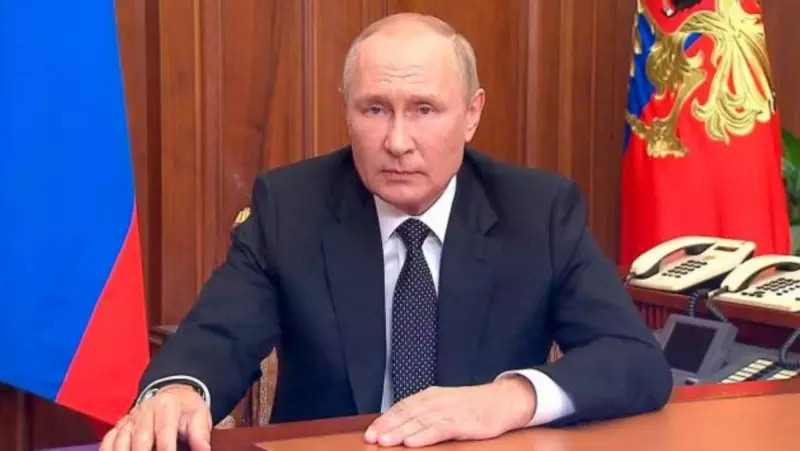
In a significant escalation of rhetoric, Russian President Vladimir Putin has issued a direct warning to European nations, cautioning them against obstructing potential peace negotiations to end the ongoing conflict in Ukraine. The statement, made during a high-profile address, underscores the deepening geopolitical rift between Russia and the West.
Putin's Stark Warning to European Powers
President Vladimir Putin declared that Russia is fully prepared to respond if European countries attempt to hinder the path to peace talks concerning Ukraine. He framed the warning as a defensive stance, accusing Western nations of prolonging the hostilities. The Russian leader emphasized that his country is "ready" for any scenario that might arise from such interference. This statement is seen as one of his most explicit threats directed at Europe regarding their role in the Ukraine war.
The address, delivered on December 2, 2025, comes amid a fragile international backdrop where diplomatic channels have seen intermittent activity. Putin's comments suggest a hardening position from the Kremlin, potentially aiming to dissuade European leaders from increasing military or political support to Kyiv under the current circumstances.

The Context of the Peace Talks and European Stance
The possibility of peace negotiations has been a topic of global discussion, with various countries and international bodies proposing frameworks for a ceasefire and a diplomatic settlement. However, deep-seated issues, including territorial control and security guarantees, have remained major stumbling blocks.
European nations, largely aligned with Ukraine's position, have consistently called for any peace to be just and sustainable, respecting Ukraine's sovereignty and territorial integrity. Putin's latest remarks appear to challenge this unified European stance directly, portraying it as an obstacle to peace rather than a foundation for it. He implied that European support for Ukraine's military efforts is the primary barrier to initiating serious dialogue.
Implications for Regional and Global Security
Analysts interpret Putin's warning as a multi-faceted move. Primarily, it serves as psychological pressure on European publics and governments, potentially aiming to sow discord and war fatigue within NATO alliances. Secondly, it reinforces Russia's narrative that it is a willing participant in peace, placing the onus for continued conflict on the West.
The direct nature of the warning raises concerns about a further deterioration in Russia-Europe relations, which have been in a state of deep freeze since the invasion began in February 2022. There are apprehensions that such rhetoric could be a precursor to more aggressive actions, either militarily in Ukraine or in the form of hybrid warfare against European interests.
Furthermore, this development complicates the diplomatic efforts of other global players who might be attempting to mediate. It sets a precondition that European influence must be curtailed for talks to proceed, a condition unlikely to be accepted by Western capitals.
In conclusion, Vladimir Putin's public warning marks a new phase of verbal confrontation. By stating Russia is "ready," he has unequivocally linked the future of peace negotiations to the actions of Europe, setting the stage for a tense diplomatic standoff. The international community now watches closely to see if this rhetoric translates into policy shifts on the ground in Ukraine or in the corridors of power across European capitals. The path to peace appears increasingly contingent on navigating this volatile blame game.