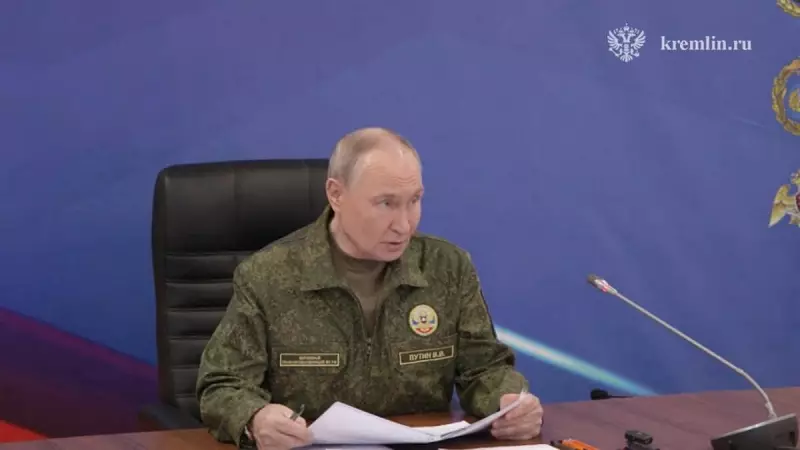
Russian President Vladimir Putin has stated that Ukraine shows no urgency in pursuing a peaceful resolution to the ongoing conflict. This declaration came in the wake of a significant overnight military offensive by Russia, involving a vast barrage of drones and missiles targeting Ukrainian territory.
Zelenskiy's Response to Overnight Assault
Earlier on Saturday, December 27, 2025, Ukrainian President Volodymyr Zelenskiy responded forcefully to the intense attacks. He stated that Russia's aggressive actions clearly demonstrate Moscow's desire to prolong the war. In contrast, Zelenskiy emphasized that the leadership in Kyiv remains committed to achieving peace, positioning Ukraine as the party seeking a diplomatic end to the hostilities.
Diverging Narratives on War and Peace
The exchange highlights the starkly opposing narratives from Moscow and Kyiv. While President Putin suggests Ukraine is stalling peace efforts, President Zelenskiy points to the scale of the military assault as proof of Russia's unwillingness to cease hostilities. The overnight attack, one of the larger coordinated strikes reported, involved a mix of long-range missiles and explosive drones, straining Ukrainian air defenses.

Implications for the Conflict's Trajectory
This public divergence in statements underscores the deep rift and lack of common ground between the two nations. Analysts suggest that such large-scale military actions, followed by accusatory rhetoric, significantly dampen the prospects for near-future negotiations. The situation continues to present a grave challenge to regional stability and international diplomatic efforts aimed at brokering a ceasefire.
The world watches closely as the war, now extending for several years, enters a phase where rhetorical battles over the desire for peace are as intense as the physical conflict on the ground. The events of December 27 reinforce the complex and protracted nature of this crisis.