Pakistan Conducts Cross-Border Airstrikes in Afghanistan, Claims 70-80 Militants Killed
In a significant escalation of tensions, Pakistan's military launched airstrikes along the Afghanistan border early Sunday, targeting what it described as militant hideouts. The operation has resulted in conflicting casualty reports and a sharp diplomatic response from Afghanistan.
Conflicting Casualty Figures Emerge
Pakistan's deputy interior minister Talal Chaudhry told Geo News that at least 70 militants were killed in the strikes, though he provided no evidence to support this claim. Later, Pakistan's state-run media revised this figure upward, reporting that militant casualties had jumped to 80.
However, Afghanistan's defense ministry presented a dramatically different account, stating that "various civilian areas" in the eastern provinces of Nangarhar and Paktika were hit. The strikes reportedly targeted a religious madrassa and multiple civilian homes, which Afghanistan called a violation of its airspace and sovereignty.

Civilian Casualties Reported in Afghanistan
Afghan government spokesperson Zabihullah Mujahid earlier stated on X that the attacks "killed and wounded dozens, including women and children." This was corroborated by Mawlawi Fazl Rahman Fayyaz, the provincial director of the Afghan Red Crescent Society in Nangarhar province, who confirmed 18 people were killed.
A Taliban government security source directly contradicted Pakistan's claims, calling the assertion of killing 80 militants "false and imaginary." The source emphasized that the strikes primarily affected civilian populations rather than militant targets.
Diplomatic Fallout and Protests
In response to the airstrikes, Afghanistan's ministry of foreign affairs summoned Pakistan's ambassador to Kabul and handed him a formal note of protest. The ministry issued a statement declaring that protecting Afghanistan's territory is the Islamic Emirate's "Sharia responsibility" and warned that Pakistan would be responsible for the consequences of such attacks.
The statement underscored the growing tensions between the two neighboring countries, with Afghanistan asserting its sovereignty in the face of what it considers unauthorized military incursions.
On-the-Ground Reports from Afghanistan
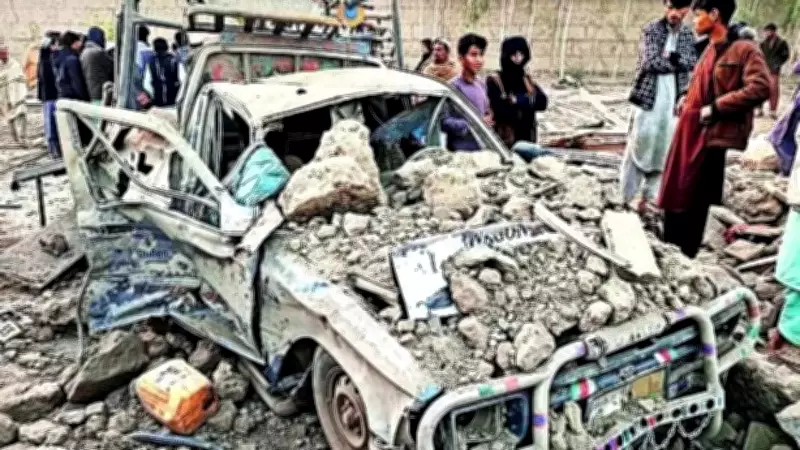
On Sunday, villagers in Nangarhar were seen clearing rubble following the airstrikes, while mourners prepared for funerals of those killed. Habib Ullah, a local tribal elder, provided firsthand testimony contradicting Pakistan's narrative.
"They were poor people who suffered greatly," Ullah told Associated Press. "Those killed were neither Taliban, nor military personnel, nor members of the former government. They lived simple village lives."
Pakistan's Justification for the Strikes
Pakistan's information minister Attaullah Tarar wrote on X that the military conducted "intelligence-based, selective operations" against seven camps belonging to the Pakistani Taliban, or TTP, and its affiliates. The strikes came hours after a suicide bomber targeted a security convoy in the border district of Bannu in Pakistan's northwest, killing two soldiers, including a lieutenant colonel.
Pakistan has long blamed militant groups operating from Afghan territory for attacks inside its borders, and these strikes appear to represent an escalation in its counterterrorism efforts, despite the diplomatic consequences.
The incident highlights the fragile security situation along the Pakistan-Afghanistan border and raises questions about the accuracy of intelligence used in cross-border operations. With both countries presenting conflicting narratives and Afghanistan lodging formal protests, the diplomatic relationship between the two neighbors faces significant strain following Sunday's military action.