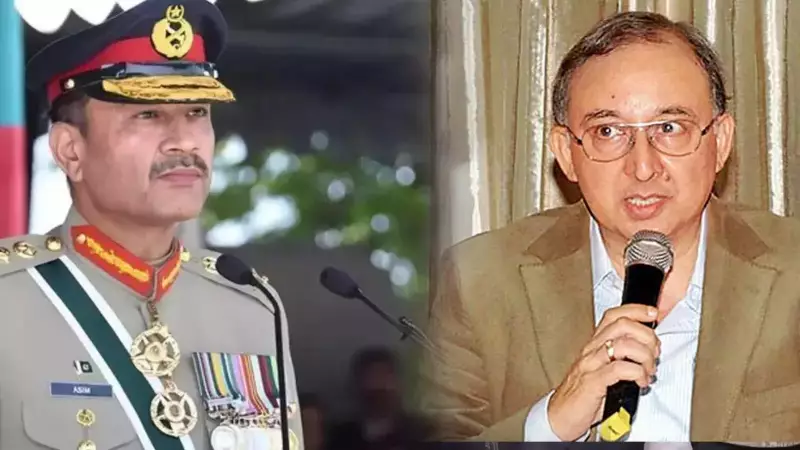
Pakistan's Deepening Political-Military Crisis
Pakistan is currently experiencing one of the most severe political-military confrontations in its history, according to security analyst Tilak Devasher, a former member of India's National Security Advisory Board. The ongoing power struggle between the Pakistan Army and Imran Khan's Pakistan Tehreek-e-Insaf (PTI) party has reached critical levels, with potential implications for regional stability.
The Roots of the Conflict
The current crisis traces back to Imran Khan's decision to remove General Asim Munir as head of Pakistan's Inter-Services Intelligence (ISI), a move that created lasting animosity between the two powerful figures. Devasher revealed that Munir has never forgiven the former prime minister for this dismissal, which has now evolved into a full-blown political confrontation.
With General Asim Munir currently controlling the Pakistan Army, he is actively ensuring that Imran Khan remains imprisoned and excluded from national politics. This represents a significant escalation in the long-standing tension between civilian leadership and military establishment in Pakistan.

Growing Concerns About Imran Khan's Wellbeing
The situation has become increasingly alarming with concerns mounting about Imran Khan's health and safety. No one has seen the former prime minister for several weeks, fueling widespread rumors about his condition. Speculation ranges from serious illness to potential poisoning or even worse scenarios.
Devasher described the current political environment in Pakistan as "as bad as it can get," indicating that the country faces unprecedented challenges in balancing military and political power. The analyst's comments, made on November 30, 2025, highlight the gravity of the situation and its potential to trigger broader conflict.
Regional Implications and Stability Concerns
The ongoing power struggle has significant implications for Pakistan's domestic stability and its relationships with neighboring countries, including India. The uncertainty surrounding Pakistan's top military leadership and political future creates potential flashpoints that could affect regional security dynamics.
As the military consolidates its influence over political matters, questions arise about Pakistan's democratic processes and the future of civilian-military relations in the nuclear-armed nation. The current standoff represents a critical juncture in Pakistan's political history with potentially far-reaching consequences.