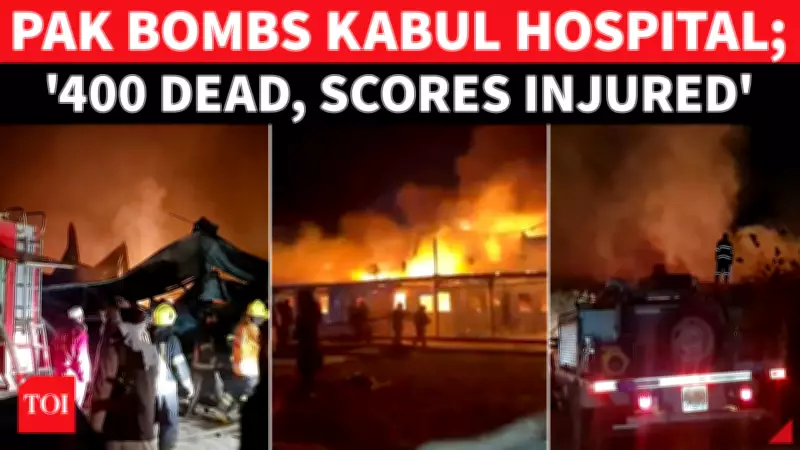
Mass Casualties Reported in Kabul Hospital Strike Amid Pakistan-Afghanistan Tensions
In a devastating incident that has sent shockwaves across the region, at least 400 people are feared dead following an alleged Pakistani air strike on a drug rehabilitation hospital in the Afghan capital of Kabul. The attack, which occurred on March 17, 2026, has sharply escalated long-simmering tensions between the two neighboring nations, with both sides engaging in a bitter war of words over responsibility and intent.
Conflicting Narratives and Denials
Taliban officials in Afghanistan have publicly accused Pakistan of carrying out the deadly strike, claiming it targeted a civilian medical facility, resulting in catastrophic loss of life. However, Pakistan has vehemently denied these allegations, asserting that its military operations were precision-targeted solely at militant infrastructure along the border, with no civilian casualties intended or incurred.
The Pakistani government released an official statement emphasizing its commitment to counter-terrorism efforts and denying any involvement in the Kabul hospital incident. "Our actions are focused on eliminating terrorist threats that endanger both Pakistani and Afghan citizens," the statement read, highlighting ongoing concerns about cross-border militancy.

Rising Global Concern and Diplomatic Fallout
With no independent verification of the casualty figures yet available, international observers and global bodies have expressed mounting alarm over the situation. The lack of transparent, on-ground assessment has fueled fears of a humanitarian crisis, potential sovereignty violations, and the risk of the conflict spilling over into a wider regional confrontation.
The United Nations and various human rights organizations have called for an immediate ceasefire and a thorough, impartial investigation into the incident. Key concerns include:
- The safety and protection of civilian populations in conflict zones.
- Adherence to international laws governing military engagements.
- The urgent need for de-escalation to prevent further bloodshed.
Historical Context and Regional Implications
This latest flare-up is not an isolated event but part of a complex, decades-long history of strained relations between Pakistan and Afghanistan. Issues such as border disputes, alleged support for militant groups, and divergent geopolitical interests have frequently led to diplomatic standoffs and occasional military skirmishes.
The timing of this incident is particularly sensitive, coming amid broader regional instability and global geopolitical shifts. Analysts warn that without swift diplomatic intervention, the situation could deteriorate rapidly, affecting not only bilateral ties but also regional security dynamics involving other key players.
The international community is closely monitoring developments, urging both nations to exercise restraint and engage in dialogue to resolve their differences peacefully. The priority remains preventing further loss of innocent lives and finding a sustainable path toward stability in South Asia.