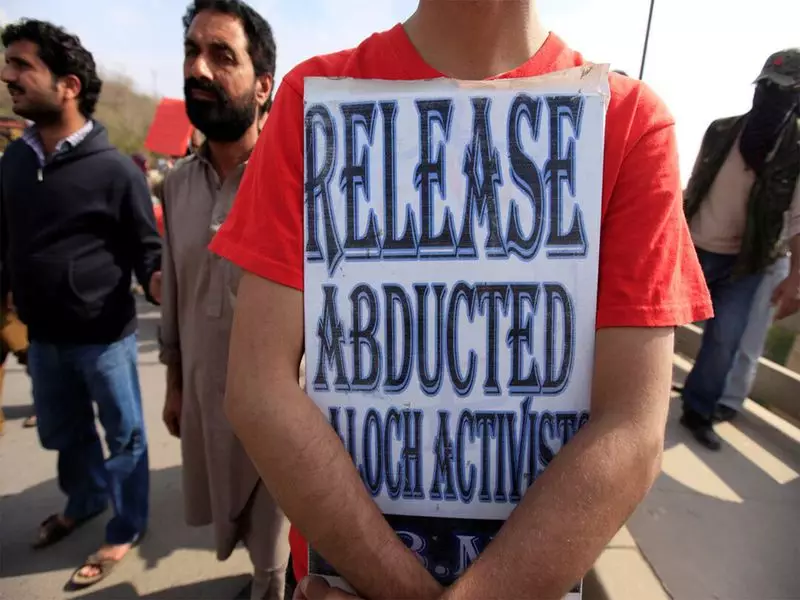
The Baloch Yakjehti Committee (BYC), a prominent rights group, has launched a scathing indictment against the Pakistani state, accusing it of deploying a sophisticated campaign of "scripted lies" to whitewash the grim reality of enforced disappearances in the troubled province of Balochistan. This accusation comes as a direct counter to recent state-sponsored media narratives that have sought to portray missing persons as willingly absconding.
The Core of the Allegation: A Pre-Planned Propaganda Campaign
According to the BYC, Pakistani authorities are orchestrating a deceptive media strategy. The committee points to specific, recent television programs where individuals previously reported as victims of enforced disappearance appeared alongside state officials, claiming they had left home voluntarily. The BYC asserts these appearances are coerced and scripted, designed to create a false narrative and undermine the legitimate protests of grieving families.
The group highlighted the case of a man named Shabbir Ahmed, who was reportedly detained by intelligence agencies. After his family protested for his release, he was presented on a news show claiming he had gone into hiding due to personal disputes. The BYC dismisses this as a blatant fabrication, part of a systematic effort to "mislead the international community and the local population."

Decades of Crisis and the Global Spotlight
The issue of enforced disappearances in Balochistan is not new. For over two decades, human rights organizations have documented the abduction of thousands of Baloch activists, students, and intellectuals by state security forces. Their fate often remains unknown, a strategy widely condemned as a tool of political repression.
The BYC's statement aims to pierce through what it calls Pakistan's "false propaganda." It emphasizes that the state's narrative crumbles under scrutiny, as these scripted interviews cannot explain the prolonged, desperate protests by families who continue to demand answers about their missing loved ones. The committee has urged international bodies, including the United Nations, to take note of these "state-led lies" and hold Pakistan accountable.
Implications and the Call for Action
This latest controversy has significant ramifications. It intensifies the scrutiny on Pakistan's human rights record in Balochistan, especially at a time when the country faces economic and diplomatic challenges. The BYC's allegations suggest a move from mere denial to active, manipulative disinformation regarding the disappearances.
The committee's revelations serve as a powerful call to action. They demand:
- An immediate end to all enforced disappearances.
- The release of all forcibly disappeared persons or their presentation before a court of law.
- An independent, international investigation into the practice.
- Global awareness to counter Pakistan's alleged propaganda machine.
By framing the state's response as a campaign of "scripted lies," the BYC seeks to galvanize both local and international opinion, challenging the official narrative and keeping the plight of Baloch families in the global human rights discourse. The struggle, they assert, is not just for the return of the missing, but also against a state apparatus engaged in distorting the truth.