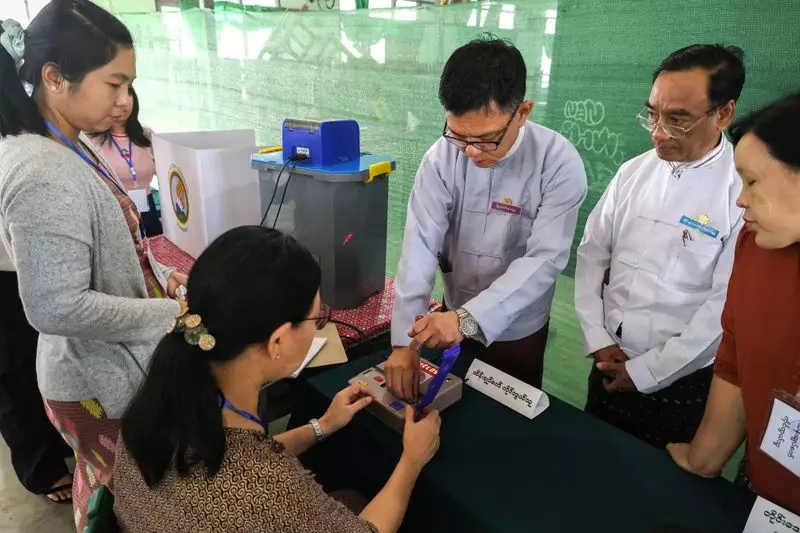
Myanmar's ruling military council has announced plans to hold the country's first general elections since it seized power in a coup over three years ago. The State Administration Council (SAC), led by Senior General Min Aung Hlaing, stated that the polls are tentatively scheduled for 2025.
The Military's Roadmap and Political Landscape
The announcement was made by the military-appointed Union Election Commission. The commission's chairman, Thein Soe, confirmed that preparations are underway for what the junta describes as a crucial step in its stated five-point roadmap to restore democracy. However, the political environment remains highly volatile and repressive.
The military has extended the state of emergency multiple times since February 2021, delaying any return to civilian rule. Major political parties, including the National League for Democracy (NLD) led by the imprisoned Aung San Suu Kyi, have been severely crippled or dissolved. The junta's proposed elections are widely expected to exclude key pro-democracy groups and are seen by critics as a sham designed to legitimize military rule.

International Condemnation and Domestic Conflict
The planned vote has been met with immediate skepticism and condemnation from the international community and opposition groups within Myanmar. Western nations, including the United States and members of the European Union, have consistently demanded the release of political prisoners and a return to the democratic path interrupted by the coup.
More critically, large parts of Myanmar are engulfed in intense armed conflict. Ethnic armed organizations (EAOs) and People's Defence Forces (PDFs) aligned with the shadow National Unity Government (NUG) control significant territory. The junta's authority does not extend uniformly across the nation, raising serious questions about the feasibility and credibility of holding inclusive and free elections under current conditions.
A Nation Divided: Prospects and Challenges
The 2025 election plan faces monumental hurdles. Beyond the widespread armed resistance, the country's economy is in shambles, and millions have been displaced. The electoral process is likely to be boycotted by major opposition factions who view participation as an endorsement of the military's illegitimate authority.
Analysts suggest the junta aims to use the elections to create a facade of legitimacy and ease international pressure. However, without the participation of key stakeholders and amid ongoing violence, the polls risk deepening the country's crisis rather than resolving it. The world watches as Myanmar approaches this contentious political milestone, which many fear will entrench military dominance rather than restore genuine democracy.